
How to Hook a Garden Hose to a Kitchen Faucet Step-by-Step
Most renters and condo owners hit the same wall when spring arrives: no outdoor spigot, just a kitchen sink. Learning how to hook a garden hose to a kitchen faucet solves that fast, but the right parts depend entirely on what’s screwed into your spout. A standard aerator uses 55/64‑27 male or 15/16‑27 female threads.
A pull‑down sprayer hides its connection behind a proprietary quick‑connect. Get the wrong adapter and you’ll leak, cross‑thread, or worse, skip the vacuum breaker and risk backflow into your drinking water.
Residential supply pressure typically runs 45, 65 psi static, while a 5/8‑inch hose at 60 psi flows around 17 GPM, far more than a 1.5 GPM WaterSense aerator can pass. That mismatch means flow will always be restricted at the faucet, not the hose. The decision tree starts with identifying your faucet type, then matching the exact adapter and backflow device.
Let’s walk through each path.

Why Your Kitchen Faucet Is the Only Outdoor Water You've Got
Apartments and older homes often lack a hose bibb on the exterior wall. Installing one means opening walls, sweating copper, and pulling permits, easily $300, $600 for a licensed plumber. A faucet-to-hose adapter costs $15, $40, requires zero permanent changes, and moves with you.
Landlords rarely object because nothing is altered. The trade‑off is flow: kitchen supply lines are ½‑inch copper or PEX, capped by an aerator that limits output to 1.5, 2.2 GPM. Your hose wants 10, 17 GPM.
You’ll water containers fine. Sprinklers will sputter. Accept that limit upfront and the setup works reliably for balcony gardens, car rinses, or filling a kiddie pool.
Quick Answer: The Adapter You Need Depends Entirely on Your Faucet Type
Standard male‑thread aerators need a 55/64‑27 male × ¾‑11.5 NH female adapter. Standard female‑thread aerators need a 15/16‑27 female × ¾‑11.5 NH male adapter. Cache or hidden aerators require a brand‑specific key (Moen, Delta, Kohler, Pfister, Grohe each use different spline sizes).
Pull‑down or pull‑out sprayers cannot use a simple aerator adapter, you need a diverter that replaces the sprayer head or taps the quick‑connect under the sink. Commercial pre‑rinse sprayers often already have ¾‑inch garden hose thread on the nozzle. Every path requires an ASSE 1011 vacuum breaker between the adapter and the hose.
How the Connection Works: Threads, Adapters, and Backflow Basics
The kitchen faucet ends in one of several thread profiles. The garden hose world standardizes on ¾‑inch NH (National Hose) thread, also called GHT. An adapter bridges the two.
Brass adapters last years; polymer ones crack after a season of UV and freeze cycles. PTFE tape on male threads, two to three wraps clockwise, seals the joint without over‑tightening. Hand‑tight plus a quarter turn with padded jaws is enough.
Reefing with channel locks strips soft brass.
Backflow is the silent hazard. When the faucet shuts off and hose pressure drops, siphon action can pull fertilizer, soap, or bacteria into your potable supply. An atmospheric vacuum breaker (AVB) vents air to break that siphon.
It must sit downstream of the adapter, at least 6 inches above the highest hose outlet. Inline AVBs cost $10, $20. Some adapters integrate one.
Per IPC and UPC, any potable‑to‑non‑potable connection requires listed backflow protection. No exceptions.
| Component | Thread Spec | Typical Cost | Material Notes |
|---|---|---|---|
| Male aerator adapter | 55/64‑27 M → ¾‑11.5 NH F | $8–$18 | Brass preferred |
| Female aerator adapter | 15/16‑27 F → ¾‑11.5 NH M | $8–$18 | Brass preferred |
| Dual‑thread adapter | Both above in one | $12–$25 | Covers unknowns |
| Cache aerator key set | 13/16.5/21/24 mm | $10–$18 | Brand‑specific |
| Pull‑down diverter | Quick‑connect × GHT | $25–$45 | Model‑matched |
| Inline vacuum breaker | ¾‑11.5 NH F × M | $10–$20 | ASSE 1011 listed |
| Quick‑connect hose end | Push‑fit × shut‑off | $6–$15 | Brass or polymer |
Identify Your Faucet First: The Four Types That Change Everything

Look at the spout tip. If you see a removable screen with flats for a wrench, it’s a standard aerator. Male threads sit on the outside; female threads sit inside the spout.
If the tip is smooth with no flats, just a slotted or star‑shaped recess, it’s a cache (hidden) aerator. You need a brand‑specific key. If the spout pulls down or out on a hose, it’s a pull‑down/pull‑out sprayer.
The aerator is inside the spray head, not accessible. You must disconnect the sprayer hose at the quick‑connect under the sink and install a diverter there. If the faucet is a high‑arch commercial style with a coil spring, check the spray nozzle, many already end in ¾‑inch GHT.
No adapter needed, just a vacuum breaker.
Path A: Standard Aerator (Male or Female Threads) — Easiest Route
Unscrew the aerator by hand or with a strap wrench. Protect the finish with a cloth. Note the thread gender.
Male threads = adapter with female 55/64‑27 inlet. Female threads = adapter with male 15/16‑27 inlet. A dual‑thread adapter covers both if you’re unsure.
Clean the faucet threads. Wrap PTFE tape on the adapter’s male threads only, two to three wraps, clockwise. Thread the adapter on by hand, then snug a quarter turn with padded channel locks.
Attach the vacuum breaker (male × female GHT) to the adapter’s hose side. Connect your hose. Turn water on slowly.
Check every joint for weeping. Tighten an eighth turn if needed. Done.
Path B: Cache/Hidden Aerator — You Need a Brand‑Specific Key
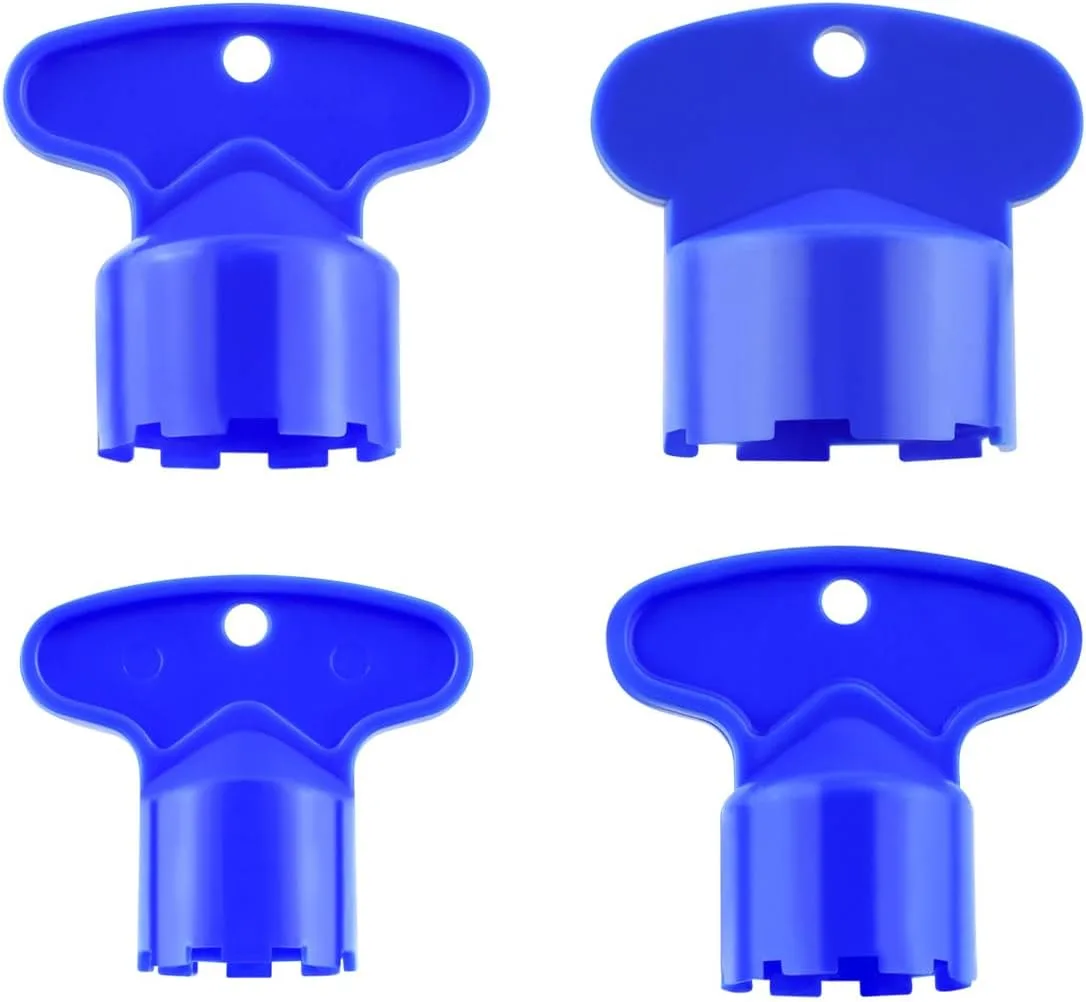
Cache aerators sit flush inside the spout with no external flats. You cannot grip them with pliers. Each major brand uses a different spline count and diameter: Moen typically 13 mm, Delta 16.5 mm, Kohler 21 mm, Pfister 24 mm, Grohe often 21 mm but with a unique star pattern.
A universal key set covers the common sizes for $10, $18. Insert the key, turn counter‑clockwise, and the aerator drops out. If the key slips, you have the wrong size, do not force it.
Once removed, the exposed threads are usually male 55/64‑27. Treat it like Path A from there. Keep the key with your tools for future cleanings; mineral buildup will seize the aerator again.
Path C: Pull‑Down or Pull‑Out Sprayer — Requires a Diverter, Not an Adapter
The sprayer head contains the aerator and connects to the hose via a proprietary quick‑connect (often a plastic collet). You cannot simply unscrew the tip. Shut off the water at the stops under the sink.
Disconnect the sprayer hose at the quick‑connect, usually a push‑button or twist release. Install a diverter tee that matches your faucet’s quick‑connect profile on one side and provides a ¾‑inch GHT male outlet on the other. Moen, Delta, and Kohler each sell model‑specific diverters; universal ones exist but leak more often.
Reattach the sprayer hose to the diverter’s other port so the sink still works. Add a vacuum breaker on the GHT outlet, then your garden hose. Expect flow around 2 GPM, enough for pots, not for sprinklers.
Path D: Commercial/Pre‑Rinse Sprayer — Check for Garden Hose Thread Already
Many pre‑rinse units end in a spray nozzle with ¾‑inch GHT male threads. Look at the nozzle tip: if it has coarse garden‑hose threads, you only need a vacuum breaker and a hose. No adapter required.
If the nozzle is a different thread (some older units use ½‑inch NPSM), you’ll need a NPSM‑to‑GHT adapter. Verify the thread with a known garden‑hose fitting before buying. These faucets often deliver higher flow, up to 4 GPM, because they lack a restrictive aerator.
That makes them the best indoor source for a hose, but they’re rare in residential kitchens.
Step‑by‑Step: Install the Adapter, Vacuum Breaker, and Hose Without Leaks

- Shut off hot and cold stops under the sink. Open the faucet to relieve pressure.
- Remove the aerator or disconnect the sprayer hose per your path above.
- Clean the faucet threads with a wire brush or old toothbrush. Remove old tape or debris.
- Wrap PTFE tape on all male threads, two to three wraps clockwise. Do not tape female threads.
- Thread the adapter onto the faucet by hand. Snug a quarter turn with padded channel locks.
- Thread the vacuum breaker onto the adapter’s GHT outlet. Hand‑tight plus a quarter turn.
- Attach a quick‑connect hose end to the vacuum breaker’s male GHT.
- Connect your garden hose to the quick‑connect.
- Slowly open the faucet. Watch every joint for the first 30 seconds. Tighten an eighth turn if any weep.
- Test backflow: close the faucet, open the hose end. No water should siphon back.
Common Mistakes That Cause Leaks, Blow‑Offs, or Contaminated Water
Cross‑threading the adapter is the top error, start threads by hand, feel for smooth engagement. Omitting the vacuum breaker violates code and risks contaminating your drinking supply. Using polymer adapters on a hot‑water line (kitchen blends hot and cold) leads to cracked bodies within weeks.
Over‑tightening with bare channel locks crushes the brass hex and strips threads. Forgetting PTFE tape on male threads guarantees a slow drip. Leaving the hose pressurized when the faucet is off stresses the adapter and can blow it off the spout.
Not draining the hose and adapter before a freeze splits the vacuum breaker body. Using a cache‑key that’s “close enough” rounds the splines and ruins the aerator.
Code & Safety: Why a Vacuum Breaker Isn't Optional
The International Plumbing Code (IPC) and Uniform Plumbing Code (UPC) both require an atmospheric vacuum breaker (AVB) on any potable‑to‑non‑potable connection. A garden hose lying in a puddle of fertilizer or soapy water creates a cross‑connection. When supply pressure drops, fire hydrant use, main break, high demand, siphon action pulls that contaminant back into your kitchen pipes.
An AVB vents air at the first sign of negative pressure, breaking the siphon. It must be installed downstream of the adapter, at least six inches above the highest hose outlet. Inline AVBs listed to ASSE 1011 cost $10, $20.
Some faucet‑to‑hose adapters integrate one; verify the listing mark on the body. No AVB means a code violation and a real health risk. Many municipalities enforce this during backflow‑prevention surveys.
If you're unsure, call your local water authority's cross‑connection control program.
Pro Tips: Freeze Protection, Flow Reality, and Quick‑Connect Upgrades
Brass adapters survive freezing better than polymer, but the vacuum breaker's plastic float will crack if water sits inside. Disconnect the hose and drain the adapter before the first hard freeze. Store the whole assembly indoors.
Flow through a kitchen faucet tops out at the aerator rating, 1.5 GPM for WaterSense models, 2.2 GPM for older units. A 5/8‑inch hose at 60 psi wants 17 GPM. You'll never get sprinkler coverage; accept container watering and gentle rinsing.
Upgrade to brass quick‑connects with auto‑shutoff on both ends. They seal instantly, prevent hose‑whip when disconnecting under pressure, and last years. Silicone grease on the O‑rings every spring keeps them seating clean.
If your faucet has a side sprayer, you can tee the diverter there and keep the main spout free, check the quick‑connect profile first.
Seasonal Shutdown: Disconnect, Drain, and Store So It Works Next Spring
Shut off the faucet. Open the hose end to relieve pressure. Disconnect the hose from the quick‑connect.
Unscrew the vacuum breaker from the adapter, water will drain out. Unscrew the adapter from the faucet. Blow compressed air through the vacuum breaker if you have it; otherwise shake it dry.
Wipe threads clean. Store adapter, vacuum breaker, and keys in a labeled zip bag under the sink. Reinstall the original aerator or reconnect the sprayer hose.
Run the faucet to flush any debris. In freeze‑prone climates, do this by Halloween. In mild zones, you can leave the adapter on year‑round if you drain the vacuum breaker after each use.
A forgotten freeze split means a $20 replacement and a wet cabinet.
FAQs: Cache Keys, Hot Water, Pressure Loss, and Rental Rules
Will a universal cache key work on my faucet?
Universal sets cover Moen, Delta, Kohler, Pfister, and Grohe spline patterns. They work on 90 percent of residential cache aerators. If the key slips, you have an oddball brand, contact the manufacturer.
Can I run hot water through the garden hose?
Standard garden hoses are rated to 140 °F. Kitchen supply blends hot and cold; at full hot you can exceed that. Run warm, not scalding, and limit duration.
Hot water also accelerates polymer adapter degradation.
Why is my flow so low compared to an outdoor spigot?
Kitchen aerators restrict to 1.5, 2.2 GPM. A ½‑inch supply line and faucet body add friction. An outdoor ¾‑inch hose bibb on a ¾‑inch line delivers 10, 17 GPM.
Physics, not a defect.
Is this allowed in my rental lease?
Most leases prohibit permanent plumbing changes. A removable adapter with no tools left behind is typically fine. Keep the original aerator.
Restore on move‑out. Check your lease for "alterations" language.
Do I need a permit?
No. Temporary adapters are not regulated as plumbing alterations. Permanent hose bibb installation requires a permit and licensed plumber in most jurisdictions.
Decision Guide: Match Your Faucet to the Right Parts in 30 Seconds
| Faucet Type | Aerator Visible? | Thread Access | Adapter Needed | Diverter Needed | Vacuum Breaker |
|---|---|---|---|---|---|
| Standard male aerator | Yes, flats outside | 55/64‑27 M | Male‑to‑GHT adapter | No | Yes |
| Standard female aerator | Yes, flats inside | 15/16‑27 F | Female‑to‑GHT adapter | No | Yes |
| Cache/hidden aerator | No, smooth tip | Requires key | Key → then male adapter | No | Yes |
| Pull‑down/pull‑out sprayer | No, inside spray head | Quick‑connect under sink | No | Model‑specific diverter tee | Yes |
| Commercial pre‑rinse | Maybe, check nozzle | Often ¾‑inch GHT | Possibly none | No | Yes |
Identify your type. Buy the matching row. Install per the step‑by‑step.
You're watering in ten minutes.


