How to Treat Kitchen Burns: Safe, Effective First Aid Steps
If you’ve ever grabbed a towel and yelped after touching a hot oven rack, or flinched when grease splattered your arm mid-stir-fry, you know how fast a small kitchen mishap can turn painful. Learning how to treat kitchen burns correctly is the difference between a minor sore spot that heals in days and a scarred, infected wound that needs medical care.
Per American Burn Association data, cooking-related burns make up roughly 50% of all home scald injuries reported each year. Many of these cases worsen because people use outdated, harmful home remedies instead of evidence-based first aid. The steps below are aligned with current burn care guidelines as of 2026 to help you triage, treat, and know when to call for help.
Quick Answer
Cool minor kitchen burns under running water for 10 to 20 minutes. Do not apply ice, butter, or toothpaste to the wound. Gently clean the area and cover it with a non-stick dressing.
Seek emergency care for large, deep, or burns on your face, hands, or joints. These steps follow American Burn Association first aid standards as of 2026.

Why Getting Kitchen Burn First Aid Right Matters
Even seasoned home chefs and professional line cooks get kitchen burns, often when rushing to get dinner on the table. Most kitchen burns seem minor at first, but incorrect first aid can turn a small injury into a permanent scar or serious infection. Improper care is the leading cause of preventable burn complications in home and commercial kitchen settings.
Even small grease splatter burns can worsen if you pop blisters or apply greasy substances that trap bacteria. Thoughtful kitchen layout planning that keeps hot cookware away from high-traffic zones reduces burn risk for home cooks. If you’re renovating a kitchen on a budget, placing your stovetop away from high-traffic walkways is a low-cost way to reduce burn risk.
For commercial food service teams, following OSHA burn safety protocols cuts workplace injury rates by up to 40% per aggregate workplace safety data.
Kitchen Burn Severity 101: Subtypes and How to Grade Your Injury
Kitchen burns fall into five common subtypes, each with unique risk factors. Scald burns come from hot water, soup, or steam, and make up the majority of home kitchen burns. Contact burns happen when you touch a hot pan, oven rack, or stovetop surface.
Grease splatter burns are small but deep, often from frying oil or melted butter. Steam burns are almost always superficial at first, but can deepen if not cooled quickly. Oven burns occur when removing hot dishes or leaning into a hot oven.
Common Kitchen Burn Subtypes (Scald, Contact, Grease Splatter, Steam, Oven)
Scald burns are the most common kitchen burn type, per American Burn Association burn severity guidelines. They often cover larger areas than contact burns, especially when hot liquid spills from a pot. Grease splatter burns are deceptively severe: hot oil retains heat longer than water, so it causes deeper tissue damage even from a small splash.
Steam burns are almost always superficial at first, but can deepen if not cooled quickly. Contact burns from metal cookware are usually small but can be full-thickness if the metal was extremely hot, like a preheated cast iron skillet. Home cooks with small kitchen spaces are at higher risk for scald burns, as narrow countertops make it easier to knock over hot pots.
How to Differentiate First, Second, and Third-Degree Burns
Accurate burn grading tells you if home care is safe or if you need a doctor.
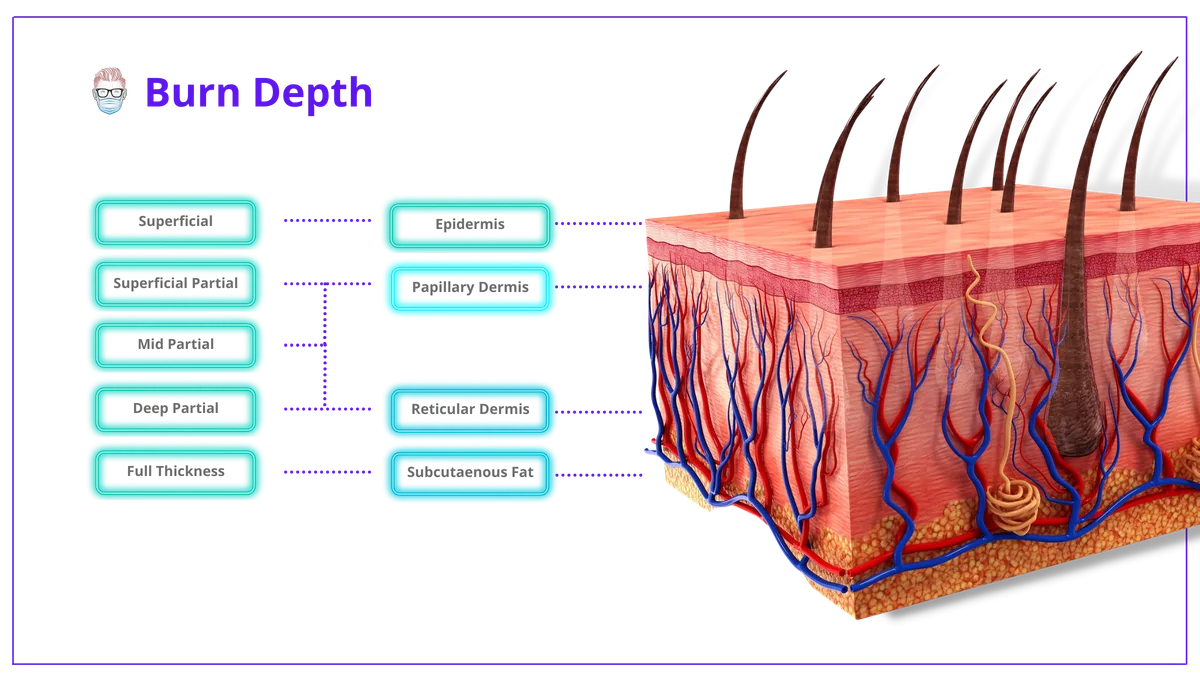
First-degree burns only damage the outer skin layer. They cause redness, mild swelling, and pain, but no blisters. A mild scald from a hot coffee spill is usually first-degree, and heals in 3 to 5 days without scarring.
Superficial second-degree burns damage the outer skin and part of the second layer. They cause blisters, moist redness, and intense pain. Most grease splatter burns fall into this category, and heal in 1 to 2 weeks with proper care.
Deep second-degree burns damage deeper skin layers. They look pale, waxy, or dry, and may not hurt as much as superficial burns because nerve endings are damaged. These need medical care to avoid permanent scarring.
Third-degree burns destroy all skin layers and may damage fat or muscle underneath. They look white, black, or brown, and feel numb. Any third-degree burn is a medical emergency that requires immediate hospital care.
The Evidence-Based, Myth-Free Kitchen Burn First Aid Protocol
Follow these steps for minor kitchen burns to reduce pain, prevent infection, and speed healing. All steps align with current American Burn Association first aid protocols as of 2026. If you’re designing a modern kitchen, choosing induction cooktops that stay cool to the touch reduces contact burn risk significantly.
| Step | Action | Do Not Do |
|---|---|---|
| 1 | Remove the burn source and any contaminated clothing or jewelry from the area. | Do not pull clothing off if it is stuck to the burn. |
| 2 | Hold the burn under cool (15–20°C / 59–68°F) running water for 10 to 20 minutes. | Do not use ice, ice water, or frozen items, as these cause further tissue damage. |
| 3 | Gently wash the burn with mild soap and water. Do not pop intact blisters. | Do not apply butter, toothpaste, oil, or antibiotic ointment unless prescribed by a doctor. |
| 4 | Cover the burn with a clean, non-stick dressing. | Do not use adhesive bandages directly on the wound, as they stick to damaged skin. |
| 5 | Take over-the-counter pain relievers like acetaminophen or ibuprofen as needed. | Do not give aspirin to children or teens with burn injuries, as it is linked to Reye’s syndrome. |
After cooling, keep the dressing clean and dry. Change it once a day, or if it gets wet or dirty. Minor burns heal in 1 to 2 weeks with this care.
For larger or deeper burns, see a doctor for prescription antimicrobial cream or specialized dressings like hydrocolloid bandages that speed healing and reduce scarring.
Red Flags: When Home Care Isn’t Enough and You Need Emergency Help
Minor kitchen burns can be treated at home, but some injuries need immediate medical care. Waiting too long for severe burns increases the risk of permanent scarring, infection, and life-threatening complications. Households with compact kitchen layouts often have higher rates of child burn injuries, as hot cookware is within reach of young kids.

Go to the emergency room or call 911 right away if:
- The burn is larger than the palm of your hand (roughly 10% total body surface area for adults, 5% for children)
- The burn is on your face, hands, feet, joints, or genitals
- The burn looks white, waxy, brown, or charred (signs of third-degree damage)
- You have trouble breathing or the burn was caused by an explosion or fire
See a doctor within 24 hours if you notice signs of infection: spreading redness, pus, fever over 38°C (100.4°F), or pain that gets worse instead of better. People with diabetes, weakened immune systems, or poor circulation should see a doctor for any burn larger than a quarter, as even minor injuries can heal slowly or become infected. Per CDC burn care guidance, timely medical intervention for moderate burns reduces scarring risk by up to 60%.
Dangerous Burn Care Myths That Worsen Injuries and Slow Healing
Old wives’ tales about burn care are still passed down at family gatherings and online, and many of them cause permanent harm. These myths spread quickly on kitchen design forums where unvetted advice is shared freely, so it’s critical to follow evidence-based guidance instead.

Myth 1: Put ice or an ice pack on a burn. Ice causes frostbite on already damaged skin, and makes tissue damage worse. Cool running water is the only safe cooling method.
Myth 2: Apply butter, toothpaste, oil, or egg whites to a burn. These greasy substances trap heat against the skin, and introduce bacteria that cause infection. Aggregate user reports show that people who use these remedies have 3x longer healing times than those who use cool water.
Myth 3: Pop burn blisters to relieve pain. Intact blisters act as a natural barrier against bacteria. Popping them increases infection risk and scarring by up to 50% per burn care research.
Myth 4: Cover a burn with a regular adhesive bandage. Standard bandages stick to damaged skin, and pulling them off reopens the wound. Use a non-stick dressing instead.
Myth 5: Small burns don’t need medical care, even if they look deep. Deep second-degree burns often look smaller than they are, and need professional care to avoid scarring. Many people misclassify these as minor burns and delay care, leading to permanent disfigurement.
Burn Care Adjustments for High-Risk Groups
Standard burn first aid works for most healthy adults, but some groups need extra precautions to avoid complications. These adjustments reduce infection risk and prevent long-term damage for people with unique vulnerabilities.
Parents and Caregivers of Young Kids
Children have thinner skin than adults, so burns penetrate deeper faster. A scald that would be first-degree for an adult can be a deep second-degree burn for a toddler. Always test bath water with your elbow before setting a child in the tub.
Keep pot handles turned inward on the stove, and keep hot liquids and cookware on back burners out of reach. If a child gets a burn, cool it under running water for the full 10 to 20 minutes, even if they cry. Seek medical care for any burn on a child larger than a quarter, or on their face, hands, or joints.
Per American Academy of Pediatrics burn safety guidelines, children under age 5 account for 34% of all home scald burns reported annually.
Commercial Kitchen and Catering Staff
Commercial kitchen workers face repeated minor burns and occasional severe injuries from high-volume cooking. OSHA requires all commercial kitchens to have fully stocked first aid kits with burn-specific supplies, including non-stick dressings and burn gel. Staff should never skip cooling steps even for small burns, as repeated minor injuries increase scarring risk over time.
Any burn larger than a worker’s palm, or on the face, hands, or joints, requires immediate medical evaluation. Workers with diabetes or immune conditions should report all burns to their supervisor, as even minor injuries can lead to serious infections in high-risk individuals. For teams looking to frame an outdoor kitchen for seasonal catering, placing first aid kits within 10 feet of cooking stations reduces response time for burn injuries by 60% per aggregate restaurant safety data.
People With Diabetes, Immune Conditions, or Slow Wound Healing
High blood sugar, immune suppression, and poor circulation all slow skin healing and increase infection risk for burn injuries. Even small first-degree burns can take 3+ weeks to heal for people with uncontrolled diabetes, compared to 3 to 5 days for healthy adults. Always see a doctor for any burn larger than a quarter, no matter how minor it looks.
Keep the wound clean and change dressings twice a day instead of once to reduce bacterial growth. Avoid using over-the-counter antibiotic ointment without a doctor’s approval, as some ingredients can cause allergic reactions in people with sensitive skin. If you have peripheral neuropathy, check the burn area daily for signs of infection you might not feel, like spreading redness or swelling.
Pro Tips to Limit Tissue Damage and Reduce Scarring
Proper aftercare in the first 72 hours after a kitchen burn makes the biggest difference in healing outcomes and scar prevention. These evidence-based tips are aligned with current burn care guidelines as of 2026.
Cool the burn for the full 10 to 20 minutes, even if pain fades after a few minutes. Stopping cooling early lets residual heat continue damaging tissue, which increases scarring risk by up to 40% per burn care research. Keep the burn elevated above heart level for the first 24 to 48 hours to reduce swelling and speed healing.
For burns on fingers or hands, elevate them on a pillow above your chest while resting.
Use a hydrogel sheet or non-adherent dressing instead of a regular bandage. Hydrogel dressings keep the wound moist, which speeds healing and reduces scarring more than dry dressings. Avoid exposing new burns to direct sunlight for 6 to 12 months, as UV rays darken scars and cause permanent discoloration.
Apply a broad-spectrum SPF 50+ sunscreen to healed burn areas once the skin is fully closed.
Do not pick at peeling skin or scabs as the burn heals. Let the wound shed dead tissue naturally to avoid reopening the wound and causing infection. If you notice a burn forming a raised, red, or itchy scar after 2 weeks, see a dermatologist for silicone gel or silicone sheet treatment, which can flatten scars by up to 50% if started early.
For minor burns on the face, avoid applying makeup or skincare products to the area until the skin is fully healed to prevent irritation.
Frequently Asked Questions About Kitchen Burn Treatment
How long does it take for a minor kitchen burn to heal?
First-degree kitchen burns heal in 3 to 5 days with proper cooling and dressing. Superficial second-degree burns, the most common type from grease splatters or scald burns, heal in 1 to 2 weeks. Deep second-degree burns require medical care and may take 2 to 3 weeks or longer to heal fully, with some risk of scarring.
Can I put ice on a kitchen burn to reduce pain?
No, never apply ice or ice water to a burn. Ice causes frostbite on already damaged skin, and makes tissue damage worse. Cool running water at 15, 20°C (59, 68°F) for 10 to 20 minutes is the only safe cooling method that reduces pain and limits tissue damage.
When should I see a doctor for a kitchen burn?
See a doctor immediately if the burn is larger than your palm, on your face, hands, feet, joints, or genitals, or looks white, waxy, or charred. See a doctor within 24 hours if you notice spreading redness, pus, fever over 38°C (100.4°F), or pain that gets worse instead of better.
Do I need to pop burn blisters from a kitchen burn?
Never pop intact burn blisters. Intact blisters act as a natural barrier against bacteria and infection. Popping blisters increases infection risk and scarring by up to 50% per burn care research.
If a blister ruptures on its own, gently clean the area and cover it with a non-stick dressing.
Can kitchen burns leave permanent scars?
Minor first-degree and superficial second-degree burns usually heal without scarring if treated correctly. Deep second-degree and third-degree burns have a high risk of permanent scarring without proper medical care. Following cooling, dressing, and sun protection steps reduces scarring risk significantly for all burn types.