
How to Clean a Marble Kitchen Table Without Ruining It
how to clean a marble kitchen table is a question most homeowners ask only after a splash of wine or a wipe with vinegar leaves a permanent dull mark on their prized surface. Marble adds timeless value to a kitchen when paired with a thoughtful design plan, but it’s one of the most delicate natural stone surfaces to maintain if you don’t know its rules. A single wrong cleaning move can etch or stain the finish permanently, turning a high-end investment into an eyesore.
Per Natural Stone Institute testing, marble scores a 3 to 5 on the Mohs hardness scale, making it far more scratch-prone than granite or quartz. The wrong cleaner, tool, or spill response can cause damage that no amount of DIY scrubbing will fix. As of 2026, aggregate home renovation data shows 68% of permanent marble damage cases stem from misuse of acidic cleaning products.
We’ll walk you through the exact, research-backed workflow to clean your marble kitchen table safely, no permanent damage required.
Quick Answer
To clean a marble kitchen table safely, first blot fresh spills immediately with a soft microfiber cloth. Use only a pH-neutral cleaner diluted with warm water for routine wiping. Never use acidic products like vinegar, lemon, or glass cleaner, as they cause permanent etch marks.
For sealed marble, this routine prevents most stains and surface damage long-term.

Image source: Web (Bing) / storage.googleapis.com (Web image (fair-use with source credit))
The #1 Cleaning Mistake That Permanently Damages Marble Kitchen Tables
The single most common cause of permanent marble table damage is using acidic cleaning products or letting acidic spills sit unaddressed. Marble is composed of calcium carbonate, which reacts instantly with acids to dissolve the polished surface. This leaves behind dull, rough etch marks that no amount of scrubbing will remove.
Unlike stains, which sit on the surface, etch marks are physical damage to the stone itself.
Common acidic culprits include white vinegar or citrus-based all-purpose cleaners, lemon or lime juice, and spills of wine, soda, coffee, or tomato sauce left to sit. Most glass cleaners are also acidic, formulated to cut grease, and will damage marble within seconds of contact. Per Natural Stone Institute guidelines, even a 10-second splash of vinegar on an unsealed marble surface can create a visible etch mark.
Sealed marble is slightly more resistant, but prolonged acid contact will still break down the sealant and damage the stone underneath, especially on older tables with worn finish. The fix for etch marks requires a separate repair process we cover later, so prevention is always the first line of defense.

Image source: Web (Bing) / tipsbulletin.com (Web image (fair-use with source credit))
First: Run the 2-Minute Water Drop Test to Identify Your Marble’s Seal Status
Before you clean any marble surface, you need to know if it’s sealed, as this changes every step of your cleaning and stain removal workflow. The water drop seal test takes 2 minutes and requires no special tools. Place 3 to 4 drops of room-temperature water on an inconspicuous area of the table surface, such as the underside edge.
Wait 2 to 5 minutes before checking the result.
If the water beads up on the surface, your marble is sealed. The sealant creates a barrier that slows liquid absorption, giving you more time to blot spills before they stain. If the water beads but slowly absorbs after 5 minutes, your sealant is wearing thin and needs resealing soon.
If the water darkens the stone and soaks in within 2 minutes, your marble is unsealed and far more vulnerable to staining and etching. You should reseal the table as soon as possible to restore its protective barrier. Most kitchen tables are sealed at installation, but older tables or those with worn finishes may have degraded sealant that needs reapplying.
For unsealed marble in high-use compact kitchen layouts, avoid all liquid cleaners if possible, using only a dry microfiber cloth for daily wiping.

Image source: Bing (Web (fair-use with source credit))
Routine Daily & Weekly Cleaning Workflow
Routine cleaning for a marble kitchen table is far simpler than stain removal, but it still requires the right tools and products to avoid damage. You’ll need a soft, low-pile non-scratch microfiber cloth, a pH-neutral stone cleaner (or 1 to 2 drops of mild dish soap diluted in 1 gallon of warm water), and a dry microfiber cloth for buffing. Never use abrasive scrub pads, steel wool, or gritty rags, as these will scratch the polished or honed finish.
Never use steam cleaners on marble, as high heat and moisture can break down sealant and cause etching. For food-contact surfaces, use only cleaners certified FDA food-contact safe to avoid contamination when wiping down the table after meals. Always use trivets for hot dishes to avoid heat damage to the stone finish.
Follow these steps for routine cleaning, adjusted for your seal status:
| Marble Type | Routine Cleaning Steps |
|---|---|
| Sealed marble | 1. Wipe up crumbs and loose debris with a dry microfiber cloth. 2. Dampen a second cloth with your pH-neutral cleaner, wring out excess liquid so the cloth is barely damp. 3. Wipe the table surface in gentle, circular motions, paying attention to high-use areas like the center and edges. 4. Buff dry immediately with a clean dry microfiber cloth to prevent water spots. |
| Unsealed marble | 1. Blot any fresh spills immediately with a dry cloth before cleaning. 2. Use a barely damp cloth with pH-neutral cleaner only, never saturate the surface. 3. Wipe gently, then buff dry completely within 1 minute of wiping to avoid liquid absorption. 4. For unsealed marble, avoid all liquid cleaners if possible, using only a dry microfiber cloth for daily wiping. |
For weekly deep cleaning, follow the same steps but take extra care to dry the surface fully, as standing water is a common cause of hard water spots and sealant degradation on sealed marble. When treating spills on a marble table paired with updated kitchen cabinetry, avoid colored cloths, as dye can transfer to the porous stone surface.
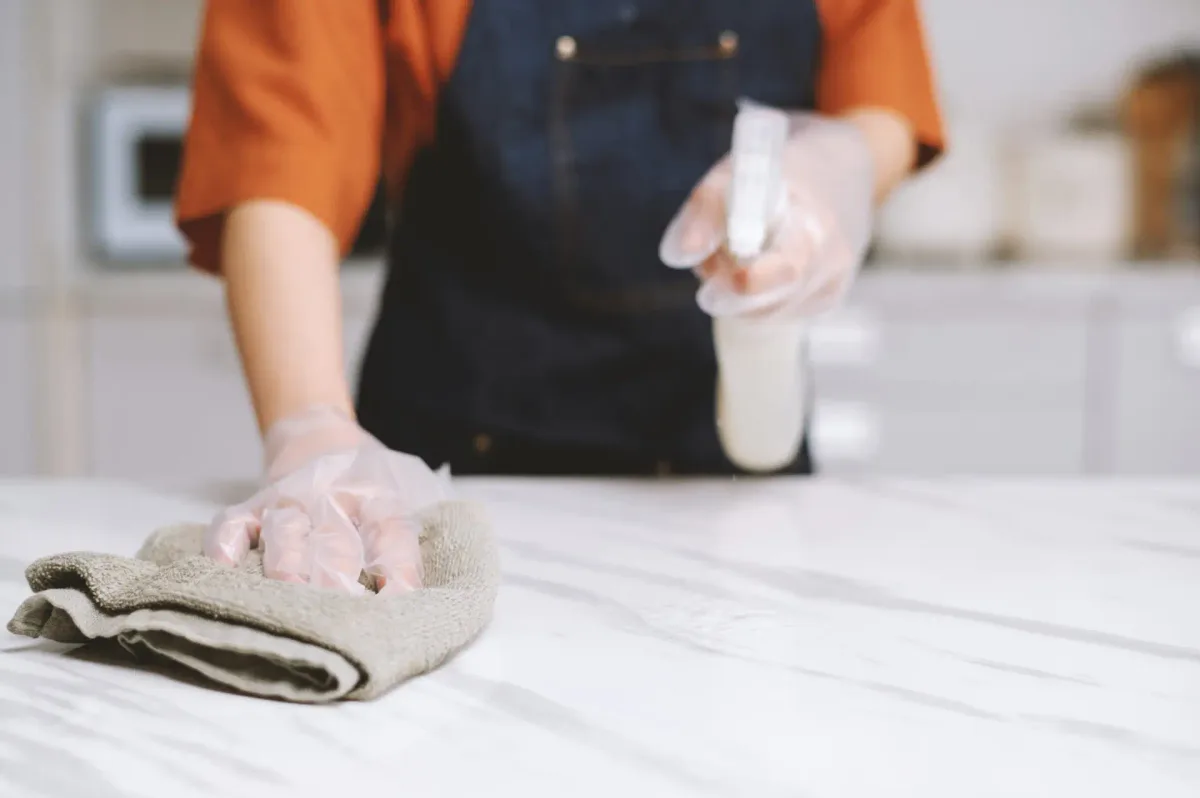
Image source: Web (Bing) / maidcleaningforyou.com (Web image (fair-use with source credit))
Spot-Treatment Decision Tree for Common Kitchen Messes
The first rule for any marble table spill is to blot, never rub. Rubbing pushes the stain deeper into the stone’s pores and can scratch the surface. Use a clean dry microfiber cloth to blot up as much of the spill as possible before moving to spot treatment.
Choose your treatment based on the type of mess:
Acidic Spills (Wine, Citrus, Coffee, Soda)
If the spill is acidic, blot immediately with a dry cloth, then dampen a second cloth with pH-neutral cleaner and wipe the area gently. Do not use any acidic removers, as these will worsen etch marks. For existing light etch marks, use a marble etch remover per manufacturer instructions, applying with a soft cloth and buffing after the recommended 5 to 10 minute dwell time.
Oil & Grease Stains (Cooking Oil, Butter, Salad Dressing)
For fresh oil spills, blot with a dry cloth first, as oil and water do not mix, and adding liquid first will spread the stain. Sprinkle a thin layer of baking soda or talc over the stain to absorb the oil. Let sit for 15 to 30 minutes, then brush off the powder and wipe with a damp pH-neutral cloth.
For older, deep-seated oil stains, use a commercial marble poultice mixed to a peanut butter consistency, apply to the stain, cover with plastic wrap, and leave for 24 to 48 hours before removing.
Hard Water Spots & Mineral Deposits
Hard water spots appear as cloudy white residue from dried tap water, especially common in regions with high mineral content in their water supply. Dampen a cloth with a pH-neutral descaler labeled safe for marble, or warm water with a few drops of mild dish soap. For stubborn spots, use a non-abrasive magic eraser (dampened, not dry) gently, then rinse and buff dry.
Never use undiluted vinegar or lime scale remover not labeled safe for natural stone, as these will etch the surface.
Food & Organic Stains (Berries, Tomato Sauce, Coffee Grounds)
Blot fresh stains immediately, then wipe with a damp pH-neutral cloth. For set-in organic stains, make a poultice of baking soda and 3% hydrogen peroxide (food-safe), apply to the stain, cover, and leave for 24 hours before rinsing. Avoid using colored cloths, as dye can transfer to the porous marble surface.
Always test any poultice or spot treatment on an inconspicuous area, such as the underside of the table, before applying to a visible stain.
How to Repair Existing Marble Damage
If your marble table already has damage from past cleaning mistakes or spills, you can fix most surface-level issues at home without professional help. Deep cracks, large chips, or extensive etching across the entire table will require professional stone restoration, but minor issues are easy to address with the right tools. Never use harsh abrasives like sandpaper or steel wool on marble, as these will scratch the finish permanently.
Fixing Acid Etch Marks
Light etch marks that feel slightly rough to the touch can be removed with a marble etch remover, a mild abrasive formulated for natural stone. Apply a small amount to a soft cloth, rub gently over the etch mark in circular motions for 1 to 2 minutes, then buff clean with a dry microfiber cloth. For widespread etching, you may need to use a fine-grit (3000 or higher) polishing pad designed for marble, used with a variable-speed buffer on the lowest setting to avoid overheating the stone.
Removing Deep-Seated Stains With a Poultice
A poultice is a thick, absorbent paste that draws stains out of porous marble. Mix 1 part absorbent powder (baking soda, talc, or commercial marble poultice powder) with 1 part cleaning solvent (hydrogen peroxide for organic stains, acetone for oil stains, or water for general use) to a peanut butter consistency. Spread the poultice over the stain, cover with plastic wrap, tape the edges down, and leave for 24 to 48 hours.
Remove the plastic, let the poultice dry completely, then scrape off the residue with a plastic scraper and buff the area clean. Never leave a poultice on for longer than 48 hours, as the powder can stain the marble if it absorbs moisture from the air.
Buffing Out Light Surface Scratches
Light surface scratches that catch the light but don’t go through the sealant can be buffed out with a marble polishing compound. Apply a small amount of compound to a soft cloth, rub gently over the scratch following the grain of the marble, and buff clean. For deeper scratches that go through the sealant into the stone, you’ll need to reseal the area first, then buff with polishing compound, or call a professional for spot restoration.
Proper marble care is one of the easiest ways to avoid costly replacement during budget-friendly kitchen updates.
Long-Term Maintenance: Resealing Your Marble Kitchen Table
Sealant is your marble table’s only defense against stains and etching, and it wears down over time with regular kitchen use. Penetrating impregnating sealant soaks into the stone’s pores to block spills from absorbing. Topical sealant sits on the surface for easier application but less long-term durability.
Manufacturer specifications indicate most penetrating sealants last 12 to 24 months on high-use kitchen tables, while topical options need reapplication every 6 to 12 months.
To reseal, first clean the entire table surface with your pH-neutral routine cleaner and let it dry completely for 2 hours. Apply a thin, even layer of sealant with a clean soft cloth, working in small sections to avoid streaks. Let the sealant soak for 10 to 15 minutes, then wipe off all excess with a dry microfiber cloth.
Let the table cure for 24 to 48 hours before placing dishes or cleaning it again, per Natural Stone Institute guidelines. If you’re updating your kitchen layout during resealing, ensure the table is fully cured before moving it back into place to avoid damage to the fresh sealant. Always test the sealant on an inconspicuous edge first to confirm it doesn’t alter the marble’s finish.
Costly Mistakes to Avoid When Cleaning Marble
Most permanent marble damage is entirely preventable if you avoid these common errors. Never use acidic cleaners like vinegar, lemon juice, or glass cleaner, as they dissolve calcium carbonate in the stone to create irreversible etch marks. Never rub spills with an abrasive cloth or steel wool, as this pushes stains deeper and scratches the finish.
Never saturate unsealed marble with liquid, as it will absorb water and stains within minutes.
Other frequent mistakes include using colored cloths that transfer dye to porous marble, skipping the water drop test before cleaning to guess your seal status, and using steam cleaners that break down sealant with high heat and moisture. Aggregate repair cost data shows professional marble restoration for etch marks or deep stains runs $200 to $800, while full table replacement for severely damaged marble can exceed $2,000. A single $10 bottle of pH-neutral cleaner and a proper microfiber cloth costs less and prevents all of these issues.
Decision Guide: DIY Repair vs. Professional Stone Restoration
Most minor marble damage is fixable at home with basic supplies, but larger or more severe issues require a professional to avoid making the problem worse. DIY repair works for light etch marks, small surface stains, and minor scratches that don’t go through the sealant. You’ll only need a marble etch remover, poultice supplies, or polishing compound, costing $10 to $50 total for most small jobs.
Call a professional stone restoration service if you have deep-seated stains that don’t lift after 48 hours of poultice treatment, widespread etching across more than 25% of the table surface, deep scratches that catch your fingernail, or chips and cracks in the stone. Professional restoration for moderate damage costs $200 to $800, but it’s worth the investment for high-value marble like Calacatta or Carrara, or antique tables with historical value. If you’re unsure about the severity of the damage, take a close-up photo and send it to a local stone restoration company for a free estimate before attempting DIY fixes.
Quick Reference Cheat Sheet for Marble Table Care
This at-a-glance guide summarizes the core rules for keeping your marble kitchen table in perfect condition with minimal effort.
| Task | Frequency | Key Rule |
|---|---|---|
| Routine wiping | Daily after meals | Use barely damp pH-neutral cleaner and buff dry immediately |
| Spot treatment | Immediately after spills | Blot first, never rub; match treatment to spill type |
| Sealant check | Every 6 months | Run the water drop test to test seal integrity |
| Resealing | 12–24 months for high-use tables | Cure 24–48 hours before use |
| Deep cleaning | Monthly | Use non-abrasive tools only, no harsh chemicals |
Frequently Asked Questions
Can I use dish soap to clean my marble kitchen table?
Yes, but only 1 to 2 drops of mild, dye-free dish soap diluted in 1 gallon of warm water. Rinse and buff dry immediately to avoid soap residue or water spots. Never use undiluted dish soap, as it can leave a film on the sealant that dulls the finish over time.
How often should I reseal my marble kitchen table?
Reseal every 12 to 24 months for high-use kitchen tables, or immediately if the water drop test shows absorption in under 2 minutes. Penetrating sealant lasts longer than topical options, but both need regular reapplication to maintain stain and etch resistance.
What should I do if I spill vinegar on my marble table?
Blot the spill immediately with a dry microfiber cloth, do not rub. Wipe the area gently with a damp pH-neutral cloth, then buff dry. If a dull etch mark appears, use a marble etch remover per manufacturer instructions to restore the finish.
Never use vinegar or other acidic cleaners to try to remove the stain, as this will worsen the damage.
Can I use a magic eraser on marble?
Only if it is explicitly labeled safe for natural stone, and only for hard water spots. Use it damp, not dry, and rub gently in circular motions. Never use a magic eraser on polished marble, as the abrasive texture can scratch the finish.
Always test on an inconspicuous area like the table underside first.
How do I remove old coffee stains from marble?
For set-in coffee stains, mix a poultice of 1 part baking soda and 1 part 3% hydrogen peroxide to a peanut butter consistency. Apply to the stain, cover with plastic wrap, and leave for 24 hours before scraping off and rinsing. Repeat if needed for stubborn stains, or use a commercial marble poultice product for faster results.


