How a Kitchen Hood Works: Your Complete Guide to
how does a kitchen hood work by pulling cooking fumes into a capture zone then pushing them through filters and out a duct or back into the room. The motor creates negative pressure that draws the rising thermal plume toward the hood face. Grease particles hit the filters while air continues through the blower.
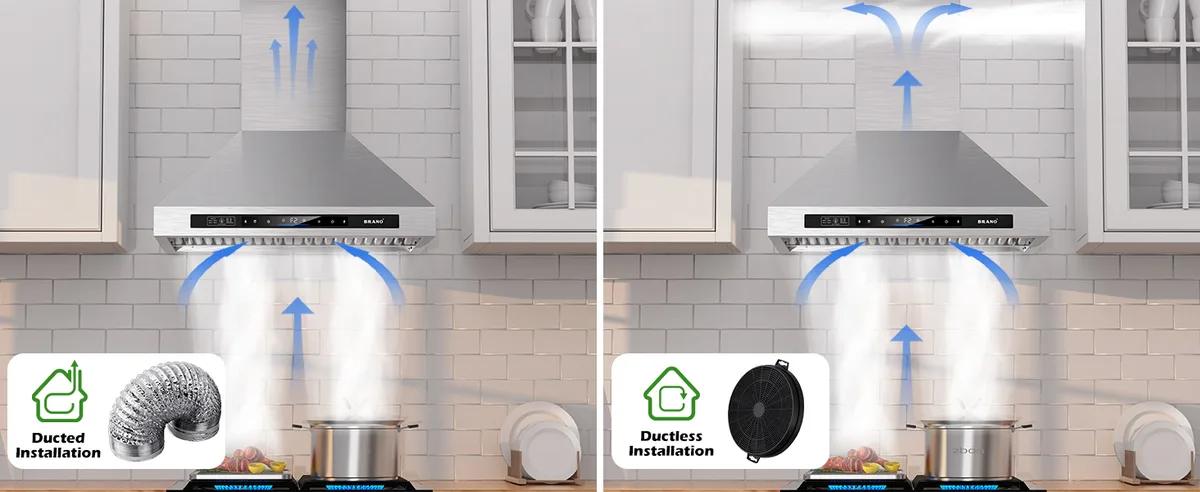
Ducted models exhaust outdoors. Recirculating models pass air through charcoal before returning it.
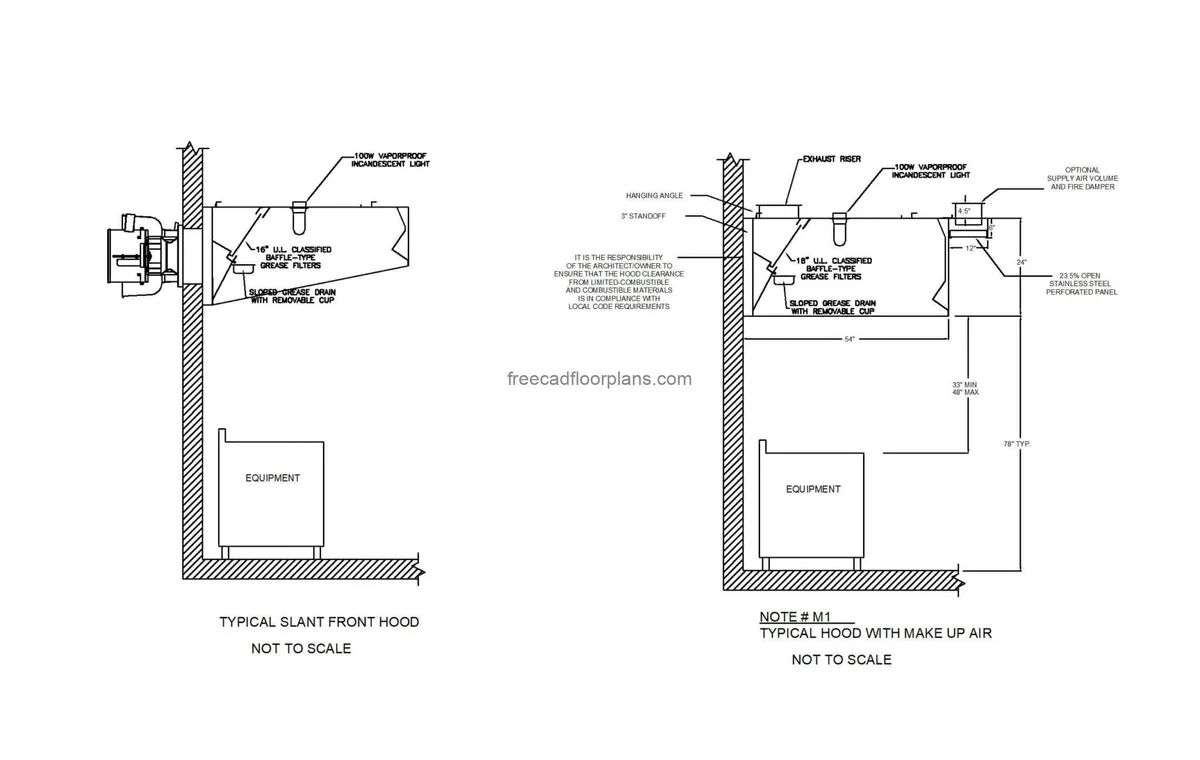
Per HVI 916 testing a typical 600 CFM hood captures 85 percent of plume at 24 inches height but drops to 60 percent at 36 inches. That gap explains why mounting height and hood depth matter more than raw CFM. The cross-section diagram below shows the full airflow path in one view.
Quick Answer
A kitchen hood captures rising cooking plume with negative pressure. The blower pulls air through grease filters. Ducted models exhaust outdoors.
Recirculating models filter through charcoal and return air. Capture efficiency depends on hood depth mounting height and CFM at working static pressure.
Why You Can't Really Explain a Hood Without a Cross-Section
Text alone cannot show how the capture zone wraps under the canopy. A cross-section reveals the Coanda effect pulling the plume tight against the hood bottom. It shows filter spacing blower location duct transition and damper in spatial relation.
You see why a shallow hood misses the plume edges. You see why a crushed flex duct chokes airflow. The diagram makes the physics visible.
Manufacturer spec sheets list CFM at zero static pressure. Installed systems run at 0.25 to 0.5 inches water gauge. The curve drops fast.
A cross-section with labeled pressure zones explains the gap. That is why pros ask for the installed curve not the free-air number.
The Anatomy: What's Actually Inside That Canopy
Every hood shares a core component set. The canopy forms the capture volume. Baffle or mesh filters sit at the leading edge.
The blower housing sits behind them. A duct collar connects to the exhaust path. A backdraft damper prevents reverse flow.
LED lighting mounts along the front or sides. Controls live on the face or a remote panel.
What Each Part Does
Canopy depth determines capture envelope. Deeper hoods reach further over the cooktop. Baffle filters force air to change direction. Grease condenses on the vanes and drains to cups. Mesh filters trap grease in layered aluminum.
They load faster and clean harder. Blower motor creates the pressure differential. Internal units mount in the canopy. Inline units sit in the duct run.
External units mount on roof or wall. Duct collar transitions from hood to duct. Round collars flow best. Rectangular collars fit tight spaces. Backdraft damper flaps open under flow.
Spring or weight returns it closed. Motorized dampers seal tighter. Lighting illuminates the cooking surface. LED strips run cool.
Halogen runs hot. Control board manages speeds timers and sensors. Capacitive touch resists grease. Mechanical switches last longer.
Filter Orientation Matters
Baffle filters install with vanes vertical. Grease drains down into cups. Upside down installation sends grease back into the blower.
Mesh filters have a flow direction arrow. Install backward and loading accelerates. The diagram in the manual shows the correct orientation.
Check it before first use.
How Capture Works: The Plume, the Coanda Effect, and Why Depth Beats Width
Hot cooking gases rise in a turbulent plume. The plume expands as it rises. At 24 inches a 12-inch pan creates a 24-inch wide plume.
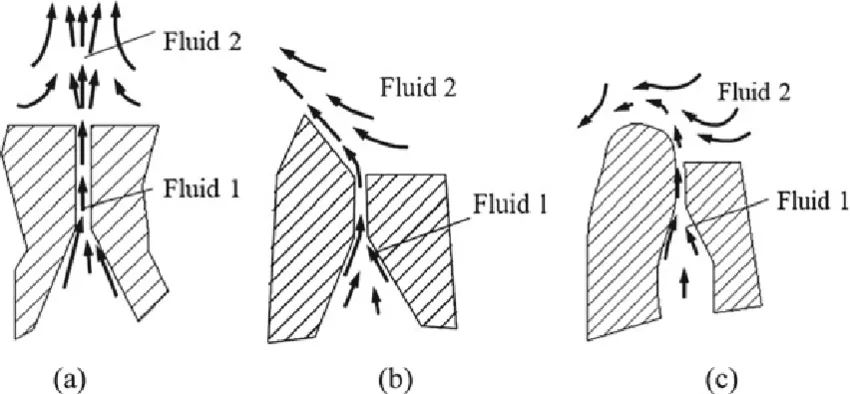
The hood must cover that envelope. The Coanda effect makes the plume hug the hood underside. Air flowing across a curved surface attaches to it.
The hood bottom acts as that surface. The plume wraps inward toward the filters.
Depth Over Width
A 24-inch deep hood captures plume from a 30-inch cooktop at 28-inch height. A 36-inch wide but 18-inch deep hood misses the edges. The plume spills past the front lip.
Depth extends the Coanda surface. Width only helps if the cooktop is wider. Island hoods need extra depth because plume approaches from all sides.
Wall hoods benefit from the wall blocking rear spill.
Capture Velocity Target
ASHRAE recommends 100 to 150 feet per minute at the hood face. That velocity pulls the plume edge inward. Low CFM hoods fall below 50 fpm at the corners.
Spillover starts there. High CFM with undersized duct also fails. Static pressure kills face velocity.
The system curve must deliver rated CFM at the installed resistance.
Ducted vs. Recirculating: Two Completely Different Air Paths
Ducted hoods move kitchen air outdoors. Recirculating hoods clean and return it. The choice depends on building code exterior access and budget.
Ducted removes heat moisture and combustion byproducts completely. Recirculating only removes grease and some odor. Charcoal does not capture carbon monoxide or nitrogen dioxide.
Ducted Path
Air enters filters passes blower exits duct collar travels duct terminates at wall or roof cap. A backdraft damper at the hood and a second at the termination prevent cold air intrusion. Duct insulation prevents condensation in cold climates.
Makeup air must replace exhausted volume. Codes require makeup air for hoods over 400 CFM.
Recirculating Path
Air enters filters passes blower enters charcoal plenum exits through perimeter slots back into kitchen. Charcoal adsorbs odor molecules. Saturation occurs at 120 to 180 cooking hours.
Replacement is mandatory. Airflow drops as charcoal loads. Grease filters must stay clean or charcoal clogs faster.
Recirculating hoods work in apartments where exterior penetration is banned.
Hybrid Option
Some convertible hoods ship with both duct collar and charcoal plenum. Installer chooses at install. Performance differs.
Ducted mode delivers full CFM. Recirculating mode loses 20 to 30 percent to charcoal resistance. Spec sheets list both curves.
Read the installed numbers not the marketing headline.
Blower Placement: Internal, Inline, or External — and Why It Changes Everything
Blower location defines noise vibration and installation complexity. Internal blowers mount inside the canopy. Inline blowers mount in the duct run between kitchen and exterior.
External blowers mount on roof or exterior wall. Each has distinct trade-offs.
Internal Blower
Easiest install. No remote mounting. Noise stays in kitchen.
Typical range 300 to 600 CFM. Vibration transmits to canopy. Cheaper models hum at high speed.
Service access requires hood removal. Best for standard wall mounts under 400 CFM.
Inline Blower
Mounts in attic or soffit. Duct connects hood to blower then blower to exterior. Kitchen stays quiet.
Vibration isolates in duct. Supports 600 to 1200 CFM. Requires access panel for service.
Duct run splits into two sections. Best for high-CFM island or pro-style hoods.
External Blower
Mounts on roof curb or wall bracket. Weatherproof housing. Zero kitchen noise.
Highest CFM capacity 900 to 2000+. Professional install required. Roof penetration needs flashing.
Wall mount needs structural backing. Best for wok cooking commercial-style ranges or passive house envelopes where interior penetrations are minimized.
Quick Comparison
| Blower Type | Kitchen Noise | Max CFM | Install Difficulty | Service Access |
|---|---|---|---|---|
| Internal | High | 600 | Easy | Hood removal |
| Inline | Low | 1200 | Medium | Access panel |
| External | None | 2000+ | Hard | Roof or ladder |
Matching Blower to Hood
Hood canopy must match blower airflow. A 1200 CFM external blower needs a canopy with 12-inch duct collar and low-resistance filters. Undersized canopy creates backpressure.
Blower curve and hood resistance curve must intersect at operating point. Manufacturer pairing guides simplify selection.
Duct Design: The Hidden Factor That Makes or Breaks Performance
The best hood fails with bad ducting. Air follows the path of least resistance. Sharp elbows crushed flex and undersized rectangles create resistance the blower cannot overcome.
The result is low face velocity noise and wasted energy. A 600 CFM blower on 3.25 by 10 inch duct delivers maybe 350 CFM at the hood.
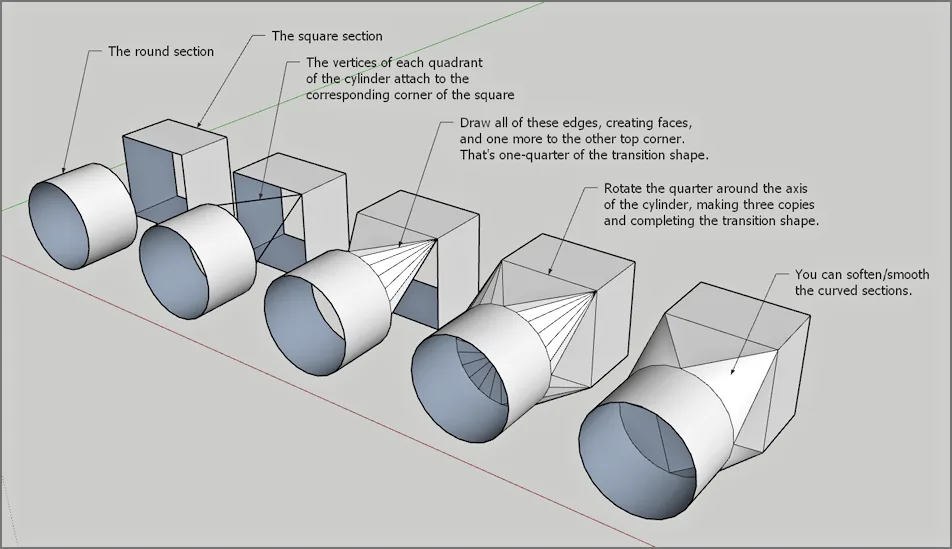
Round Beats Rectangular
Round duct has the lowest surface area per unit volume. Less friction. A 6-inch round duct carries 600 CFM at 600 feet per minute with 0.08 inches pressure drop per 10 feet.
The equivalent 3.25 by 10 inch rectangle drops 0.25 inches over the same run. That difference determines whether the blower hits its curve.
Elbow Penalties
Each 90-degree elbow adds equivalent length. A smooth radius 6-inch elbow adds 10 feet. A mitered elbow adds 35 feet.
Two mitered elbows eat 70 feet of budget. Keep the run straight. Use two 45s instead of one 90 when space allows.
The diagram shows the pressure gradient across each fitting type.
Flex Duct Is a Trap
Semi-rigid aluminum flex looks convenient. It crushes at every support. The corrugations triple friction.
A 10-foot compressed flex run equals 50 feet of smooth pipe. If you must use flex stretch it tight. Support every 4 feet.
Limit to 5 feet total. Better yet run rigid pipe and use a short flex connector at the hood collar only.
Duct Velocity Target
Keep velocity between 600 and 1200 feet per minute. Below 600 grease settles in horizontal runs. Above 1200 noise spikes.
Size the duct for the installed CFM not the rated max. A 10-inch round duct at 1000 CFM runs 1800 fpm, too loud. Step up to 12-inch or drop CFM.
Termination Details
Wall caps need a damper and bird screen. Roof caps need a backdraft damper and 12-inch clearance above roof line. Both need a drip edge to shed rain.
Seal the penetration with flashing tape. Insulate the last 5 feet in climate zones 5 and above to stop condensation.
Makeup Air: The Missing Half of the Equation
A hood exhausts air. That air must come from somewhere. Without a planned path it pulls through cracks doors flues and combustion vents.
That is backdrafting. It kills pilots pulls carbon monoxide and depressurizes the envelope. Codes require makeup air for hoods over 400 CFM.
Passive Makeup Air
A wall vent with a motorized damper interlocked to the hood switch. Simple cheap. Works for 400 to 600 CFM in mild climates.
Cold air dumps directly into kitchen. No tempering. Not allowed in some energy codes.
Size the vent at 1 square inch per CFM. A 600 CFM hood needs a 600 square inch opening, roughly 24 by 25 inches.
Powered Makeup Air
A supply fan ducted to the kitchen. Interlocked to hood. Can include a heater or ERV core.
Handles 600 to 1200 CFM. Tempers incoming air. Balances pressure precisely.
Best for tight envelopes high CFM and cold climates. Costs more. Needs electrical and controls.
ERV and HRV Integration
An energy recovery ventilator can serve as makeup air. The hood switch triggers high speed on the ERV. Supply air tempers through the core.
Exhaust air preconditions incoming stream. Efficiency hits 70 to 85 percent. One system does ventilation and makeup.
Duct sizing must handle both flows.
Sizing the Makeup Fan
Match hood CFM within 10 percent. Oversupply pressurizes the kitchen. Undersupply leaves negative pressure.
Measure with a manometer. Target neutral or slightly positive 0.01 to 0.02 inches water gauge. Adjust fan speed or damper position until pressure holds steady at max hood speed.
Sizing It Right: Cooktop BTU, Hood CFM, and the 100 CFM per 10k BTU Rule
The industry rule of thumb: 100 CFM per 10,000 BTU for gas. Electric and induction need 40 CFM per linear foot of cooktop. A 48-inch pro range with 60,000 BTU needs 600 CFM minimum.
A 30-inch induction needs 120 CFM. Those are minimums. Real world adds 25 percent margin.
Gas Cooktop Calculation
Add all burner BTUs. Divide by 100. That is base CFM.
Example: 15k + 15k + 9k + 5k = 44,000 BTU. Base 440 CFM. Add 25 percent for duct loss and plume spill = 550 CFM.
Round to nearest standard blower size 600 CFM.
Electric and Induction Calculation
Measure cooktop width in feet. Multiply by 40. A 36-inch cooktop is 3 feet. 3 times 40 = 120 CFM base.
Add 25 percent = 150 CFM. Standard 300 CFM hood covers it with room to spare. Depth and capture matter more than raw CFM here.
Wok Burner Exception
A dedicated wok burner hits 25,000 to 100,000 BTU alone. The plume is violent and wide. You need 800 to 1200 CFM with a deep canopy 27 inches minimum.
External blower preferred. Makeup air mandatory. This is not a standard residential hood scenario.
Island Hood Multiplier
Island hoods need 1.5x the wall-mount CFM. No back wall to contain plume. Plume approaches from four sides.
A 600 CFM wall hood becomes 900 CFM island. Depth must be 30 inches minimum. Mount at 24 inches max.
Anything higher loses capture.
Downdraft Reality Check
Downdrafts fight physics. They pull against the rising plume. Capture efficiency rarely exceeds 50 percent.
Only viable for low-BTU electric cooktops under 300 CFM. Gas cooktops with downdraft are a compromise. Do not expect source capture.
Mounting Height and Overhang: The Numbers That Actually Work
Mounting height is measured from cooking surface to hood bottom. Gas: 24 to 30 inches. Electric induction: 20 to 24 inches.
Manufacturer spec overrides general rules. Always follow the install manual.
Why Height Matters
Every inch higher expands the plume. A 6-inch rise doubles plume width. The hood must cover that expanded envelope.
A 30-inch hood at 36 inches misses a 12-inch pan plume. At 24 inches it captures clean. Lower is better for capture.
Higher is better for head clearance. Split the difference at 28 inches for gas 22 for electric.
Overhang Past Cooktop Front
Hood should extend 3 to 6 inches past the cooktop front edge. That puts the filters directly over the plume core. Standard 30-inch hood on 30-inch cooktop has zero overhang.
Plume spills at the front. A 36-inch hood on 30-inch cooktop gives 3 inches each side. Capture improves dramatically.
Island Hood Centering
Center the hood over the cooktop. Equal overhang all four sides. A 48-inch hood on 36-inch cooktop gives 6 inches per side.
That is the sweet spot. Deeper canopy helps more than wider. A 30-inch deep 42-inch wide hood beats a 24-inch deep 48-inch wide hood.
Ceiling Height Constraints
Standard 8-foot ceiling limits hood height. A 36-inch tall canopy plus 24-inch mount leaves 36 inches to ceiling. Chimney extension covers the gap.
For 9-foot ceilings you need a 48-inch chimney. Custom heights available. Measure before ordering.
Visual Red Flags: Installation Mistakes You Can Spot From Across the Kitchen
You don't need tools to see a bad install. Look for these tells. They explain poor capture noise and code violations.
Crushed Flex Duct
The duct disappears into the ceiling flattened to an oval. Airflow is choked. Noise is high.
Grease builds in the crush zone. Fix: replace with rigid pipe.
Baffle Filters Upside Down
Vanes run horizontal. Grease cups face up. Grease drains into blower.
Fire risk. Fix: flip filters. Arrows point up.
Hood Mounted Too High
Bottom of canopy at 36 inches over gas range. Plume spills past edges. Cabinets get greasy.
Fix: remount lower or add a deeper hood.
Missing Makeup Air Vent
Hood runs 600 CFM. No vent on exterior wall. Range pilot flickers when hood starts.
Door hard to open. Fix: install interlocked makeup air.
Duct Tape on Duct Joints
Silver tape fails in heat. Foil tape with acrylic adhesive lasts. Mastic seals best.
Tape flags mean amateur work.
Termination Vent Flapper Stuck
Outside wall cap flapper seized shut. Hood pressurizes duct. Backdrafts into kitchen.
Fix: clean or replace cap.
Charcoal Filter Never Changed
Recirculating hood smells like old oil. Airflow weak. Charcoal saturated.
Fix: replace filter per schedule.
Lighting Color Mismatch
One LED strip warm one cool. Driver failed on one channel. Fix: replace driver board.
Damper Rattles at Low Speed
Backdraft damper chatters in breeze. Spring too light. Fix: upgrade to weighted or motorized damper.
Hood Not Level
Canopy tilts forward. Grease pools at low end. Drains miss cups.
Fix: shim mounting brackets.
Filter Maintenance: What Clean vs. Clogged Looks Like (And Why It Matters)
Baffle filters clean in the dishwasher monthly. Mesh filters need hand scrubbing quarterly. Charcoal filters replace at 120 to 180 cooking hours.
A clogged filter adds 0.15 inches static pressure. That drops CFM 20 percent. Grease buildup in the plenum is a fire hazard.
Clean filters keep capture velocity on target.
Code Compliance: What Inspectors Check — and What They Miss
IRC M1503 requires outdoor termination. IMC 505 mandates makeup air over 400 CFM. UL 507 listing on the hood assembly.
HVI certification on airflow numbers. Inspectors check duct material damper termination clearance. They often miss charcoal saturation recirculating installs and passive makeup air sizing.
Verify the whole chain yourself.
Real-World Scenarios: Wok Burner, Island Cooktop, Passive House, ADU
Wok burner needs 1000 CFM external blower 30-inch deep hood dedicated makeup air. Island cooktop needs 1.5x wall CFM centered overhang all sides. Passive house needs ERV-integrated makeup air sealed duct penetration.
ADU with no exterior wall runs recirculating with MERV 13 pre-filter charcoal on 180-hour schedule.
Quick Reference: Specs to Verify Before You Buy or Sign Off
| Spec | Target | Verify Via |
|---|---|---|
| CFM @ 0.25" w.g. | ≥ cooktop need | HVI directory |
| Sones @ working speed | ≤ 6 | HVI listing |
| Duct diameter | ≥ 6" round | install manual |
| Capture depth | ≥ cooktop + 3" | product spec |
| Makeup air interlock | required > 400 CFM | local code |
| Filter type | baffle preferred | product spec |
| Damper | motorized best | install manual |
Frequently Asked Questions
How often should I clean baffle filters?
Monthly in the dishwasher for normal cooking. Twice monthly for heavy grease. Visual check: if grease drips from vanes it is overdue.
Can I use flexible duct for the whole run?
No. Code limits flex to 5 feet total. Use rigid pipe for the run.
Flex only at the hood collar connection.
Does a recirculating hood meet code for gas ranges?
Most jurisdictions require ducted for gas. Recirculating does not remove combustion byproducts. Check local amendment.
What CFM do I need for a 36-inch induction cooktop?
Base 120 CFM. Add 25 percent margin. A 300 CFM hood is plenty.
Prioritize depth and mounting height over raw CFM.
How do I know if makeup air is working?
Hold a tissue at the makeup vent. It should pull inward when hood runs. Or measure kitchen pressure with a manometer.
Target neutral to slightly positive.