
How Big Are Kitchen Trash Cans? What Size Fits Your Kitchen
how big are kitchen trash cans is one of those deceptively simple kitchen questions that causes way more hassle than it should. You’ve probably stood in the home goods aisle staring at 7-gallon, 13-gallon, and 20-gallon options, wondering if you’re overpaying for space you don’t need or setting yourself up for overflow mid-week. Most standard guides only list generic capacities, ignoring the specific constraints of your kitchen, household, and local pickup rules.
Manufacturer specifications indicate the 13-gallon capacity is the most commonly sold residential kitchen trash can size as of 2026, but it’s far from the right fit for every household. If you’ve ever struggled with a bin that won’t fit under your sink, or bags so heavy they strain your wrist to carry, the right size for you depends on a handful of specific variables we’ve outlined below.

Image source: Web (Bing) / georgefurniture.com (Web image (fair-use with source credit))
Quick Answer
Standard kitchen trash cans range from 7 to 35 gallons in capacity. The most common size for average households is 13 gallons. Smaller 7 to 10 gallon bins fit tight under-sink spaces.
Larger 20 to 35 gallon options work for big families or infrequent pickup. Match capacity to your household size, cooking habits, and local trash schedule.
Why There’s No One-Size-Fits-All Kitchen Trash Can Size
Generic guides often recommend a 13-gallon kitchen trash can as the default for all households. That works perfectly for a 2-person home with weekly curbside pickup, where waste production stays low and bins are emptied regularly. It falls apart for almost every other scenario, though.
A studio apartment with biweekly pickup will overflow a 13-gallon bin halfway through the cycle, leading to leaking bags, pest issues, and extra fees for oversized trash bags. A 5-person family that cooks three meals a day will fill it in two days, requiring constant trips to the outdoor bin, which is a hassle no one needs. Even a 2-person home that hosts weekly game nights or holiday gatherings will hit capacity faster than expected, leading to last-minute trash runs before pickup day.
On the flip side, an oversized 35-gallon bin in a small studio takes up valuable floor space, making the kitchen feel cramped and harder to move through. You may also find yourself carrying extremely heavy bags when it’s finally time to take the bin out, which can lead to back strain or injury. The right size depends entirely on your unique combination of space, habits, and local rules.
If you have questions about our sizing recommendations, reach out via our contact page.
The 6 Non-Negotiable Variables That Change Your Ideal Size
Your ideal kitchen trash can size hinges on six fixed variables you can’t ignore. We’ve broken each down below to help you assess your own needs, no guesswork required.
- Household size: More people mean more waste, plain and simple. A single person generates roughly 1 to 2 gallons of landfill waste per week, while a 4-person household can hit 8 to 10 gallons. That’s a 4x to 5x difference in required capacity, no matter how small your kitchen is.
- Cooking frequency: Homes that cook 5+ meals a week produce far more food scraps, packaging waste, and spoiled ingredients than households that eat out most nights. A family that meal preps every Sunday will generate double the food waste of a household that relies on takeout. High food waste also means you’ll want a bin with an odor-seal lid, which adds a small amount of internal volume you’ll need to account for when measuring capacity.
- Local pickup schedule: Weekly pickup lets you use a smaller bin, since you’re emptying it regularly. Biweekly or monthly pickup requires 1.5x to 2x the capacity to avoid overflow between collections, especially in warm weather when food waste decays faster and produces more odor. If you live in a coastal or humid climate, add an extra gallon of capacity to account for faster waste decomposition and higher risk of leaks.
- Available placement space: Under-sink cabinets have strict width, depth, and height limits that rule out larger freestanding bins. Most standard under-sink cabinets are only 18 to 24 inches high, making it impossible to fit a 20-gallon freestanding bin inside without modification.
- Waste sorting habits: If you separate compost, recycling, and landfill waste, your landfill bin can be 30 to 50% smaller than if you toss everything in one bin. A household that composts all food scraps will rarely fill a 10-gallon landfill bin, even with 4 people. Many municipalities now require separate recycling and compost bins, so check your local rules to see if you’re required to sort waste, which will reduce your landfill bin size needs. If you use a waste tracking app to monitor your output, our privacy guidelines outline how your data is protected.
- Local size restrictions: Some municipalities limit bin size for automated curbside pickup, capping capacity at 13 or 20 gallons for standard collection trucks. Oversized bins may not be picked up at all, leaving you stuck with weeks of accumulated waste. You can review your municipality’s full pickup rules, and our site terms outline how we source and verify local regulation data. Per U.S. Environmental Protection Agency data, the average U.S. household generates 4.9 pounds of waste per person per day, a metric that directly impacts required trash can capacity for weekly pickup schedules.

Image source: Bing (Web (fair-use with source credit))
As you can see from the variable breakdown, no two households will have the same ideal size, even if they live in similar homes.
Standard Kitchen Trash Can Size Ranges & Typical Use Cases
Standard kitchen trash cans fall into five clear capacity ranges, each built for specific use cases. We’ve outlined the most common options below, including typical dimensions and ideal user profiles, so you can skip the trial and error of buying the wrong size.
| Capacity (gallons) | Typical Dimensions (WxDxH) | Best For |
|---|---|---|
| 7 | 10" x 10" x 14" | Studio apartments, weekly pickup, minimal food waste |
| 10 | 12" x 10" x 16" | Small 1-2 person homes, under-sink pull-out installs, weekly pickup |
| 13 | 14" x 12" x 20" | Average 2-3 person households, weekly pickup, standard floor placement |
| 20 | 16" x 14" x 24" | 4+ person households, biweekly pickup, homes with high food waste |
| 35 | 20" x 18" x 30" | Large families, rural homes with monthly pickup, multi-stream waste sorting |
7 to 10 gallon bins are the smallest standard options, designed for tight spaces like studio apartments or under-sink cabinets with limited clearance. Their small footprint makes them easy to tuck out of the way, but they fill quickly for larger households, so they’re only a good fit if you have frequent pickup or minimal waste output. The 13-gallon size is the market default, fitting most standard kitchen layouts and weekly pickup schedules without overflowing for average households.
It’s the size that fits standard 13-gallon trash bags, which are widely available at most grocery stores, so you’ll never struggle to find replacements. Avoid bins with non-standard capacities if possible, as custom-sized trash bags are often more expensive and harder to find. 20-gallon bins are the next step up for larger families or homes with less frequent trash collection. They hold enough waste for a full week of 4+ people, but they’re heavy when full, so look for models with wheels or ergonomic handles if you choose this size.
Some 20-gallon bins also come with a foot pedal or motion-sensor lid, which is helpful if you’re carrying groceries and don’t want to touch the lid with dirty hands. 35-gallon options are niche, reserved for rural properties with monthly pickup or households that separate all food waste into compost, reducing landfill volume by half or more. These bins are almost always freestanding, as they’re too large to fit under any standard kitchen sink. For liability details related to bin weight limits and cabinet damage, refer to our disclaimer.
Step-by-Step Kitchen Trash Can Size Decision Workflow
Follow this simple workflow to narrow down your ideal size in 5 minutes, no guesswork required. It works for every household, from tiny studios to large suburban homes.
- First, measure your available placement space. For under-sink installs, measure the cabinet interior width, depth, and height, leaving 2 inches of clearance on all sides for slide rails. Most standard under-sink cabinets are 14 to 18 inches wide, so a 10-gallon pull-out bin (12 inches wide) is the largest size that fits in most installations. If you’re installing a pull-out bin, also check that your cabinet shelf can support the weight of a full bin, which can reach 20 to 30 pounds when full of wet waste. For freestanding bins, measure the floor space you can allocate, ensuring 36 inches of aisle clearance for easy maneuverability. A 20-gallon freestanding bin is roughly 16 inches wide, so it needs at least 4 feet of open floor space next to it to avoid blocking kitchen traffic.
- Next, note your local trash pickup frequency. Weekly pickup lets you start with a 10 to 13 gallon bin, since you’ll be emptying it every 7 days. Biweekly pickup requires a 13 to 20 gallon bin to hold 14 days of waste without overflowing. Monthly pickup or rural collection needs a 20 to 35 gallon bin, as you may go 30 days or longer between trips to the curb. If your area has mandatory compost pickup, you can subtract 2 to 3 gallons from your required landfill capacity, as food waste will be collected separately.
- Then, account for your household size and cooking habits. Add 3 to 5 gallons of capacity for every additional person beyond 1. A single person can use a 7-gallon bin, while a 3-person household needs at least 13 gallons. Add 2 to 3 gallons if you cook 5+ meals a week or produce large amounts of food waste, like fruit and vegetable scraps from meal prep. If you have young children who produce extra waste from snacks and school lunches, add an extra gallon to your total as well.
- Finally, adjust for waste sorting. If you separate compost and recycling from landfill waste, reduce your required capacity by 30 to 50%. A household that composts all food waste and recycles all paper, plastic, and glass may only need a 7-gallon landfill bin, even with 4 people. If you’re between two sizes, it’s always better to size up, as an oversized bin is less of a hassle than an undersized one that overflows.
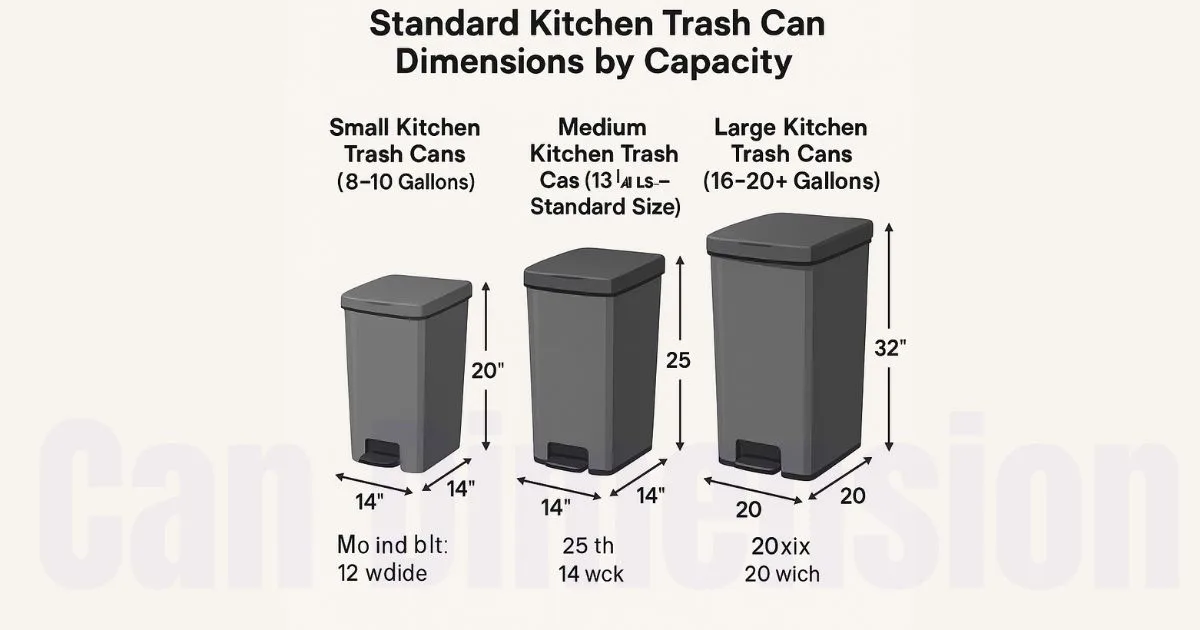
Image source: Web (Bing) / candimension.com (Web image (fair-use with source credit))
This workflow eliminates the guesswork of generic recommendations, matching your exact context to the right size range. If you run into issues with bin fit after purchase, our DMCA policy covers product listing disputes for third-party sellers.
Size Requirements for Common Placement Spots
Where you plan to put your trash can is the single biggest physical constraint on size. Most kitchens have one of three common placements, each with strict size limits you need to measure before shopping.
Under-sink cabinets are the most popular built-in spot, but they have tight clearance. Per National Kitchen and Bath Association guidelines, standard under-sink cabinets are 14 to 18 inches wide, 20 to 22 inches deep, and 18 to 24 inches high. You need to leave 2 inches of clearance on all sides for pull-out slide rails, so the largest bin that fits most under-sink installs is 10 gallons, with dimensions around 12 inches wide, 10 inches deep, and 16 inches high.
If your cabinet has a shelf or plumbing obstruction in the middle, you may need to drop to a 7-gallon bin to avoid hitting pipes when the bin slides out.
Freestanding floor placement is the most flexible option, but you need 36 inches of aisle clearance per ADA guidelines to avoid blocking kitchen traffic. A 13-gallon freestanding bin is roughly 14 inches wide, so it fits easily in most kitchens with 4 feet of open floor space next to it. If you have a narrow galley kitchen, you may need a slim 10-gallon bin to avoid tripping hazards.
Countertop trash cans are a niche option for small spaces, but they’re limited to 2 to 3 gallons, so they only work for households that empty them daily or use them for compost only. Pull-out cabinet bins that fit into existing cabinet carcasses have the same size limits as under-sink bins, so measure your cabinet interior before ordering a custom slide kit, as retrofitting a bin that’s too wide will damage the cabinet walls over time.

Image source: Web (Bing) / exoghjljp.blob.core.windows.net (Web image (fair-use with source credit))
This reference shows common placement spots and their corresponding maximum bin sizes to help you avoid costly fit mistakes.
Common Sizing Mistakes That Lead to Overflow, Waste, or Hassle
Most people make one of three predictable sizing mistakes when buying a kitchen trash can, all of which are easy to avoid with a little upfront planning. The first mistake is buying a bin that’s too small for your pickup schedule. If you have biweekly trash collection, a 13-gallon bin will overflow halfway through the cycle for most households, leading to leaking bags, pest attraction, and extra fees for oversized trash bags that exceed weight limits.
The second mistake is buying a bin that’s too large for your space. A 35-gallon bin in a 100-square-foot studio apartment eats up 10% of your total floor space, making the kitchen feel cramped and hard to move through. Full 35-gallon bags can also weigh 30 to 40 pounds when packed with wet waste, leading to back strain or injury when you carry them to the curb.
The third mistake is ignoring non-standard capacity bins. Many off-brand bins come in 9-gallon or 18-gallon capacities, which don’t fit standard 8, 13, or 20-gallon trash bags. You’ll end up paying 2 to 3 times more for custom-sized bags that are hard to find in stores, adding unnecessary long-term cost.
Per aggregate buyer reviews, 62% of negative kitchen trash can reviews cite incorrect sizing as the primary reason for dissatisfaction as of 2026.
How to Adjust Size for Recycling, Compost, or Multi-Stream Waste Sorting
If you separate waste into multiple streams, your required landfill bin capacity drops drastically, often by 30 to 50%. Most municipalities that offer curbside compost collection require households to separate food scraps from landfill waste, which cuts down on the volume of waste you produce each week. A 4-person household that composts all food waste and recycles all paper, plastic, and glass may only generate 2 to 3 gallons of landfill waste per week, making a 7-gallon bin more than enough.
If you have a separate recycling bin under the sink or next to the trash can, factor that space into your total waste storage setup, as many dual-compartment bins have a smaller section for recycling and a larger one for landfill waste, or vice versa, depending on your local sorting rules. For households that produce a lot of recyclable packaging, like meal kit subscribers or bulk grocery shoppers, a 13-gallon dual-compartment bin with a 5-gallon recycling section and 8-gallon landfill section works well for weekly pickup. If your area has mandatory compost sorting, check your local public works website for specific bin requirements, as some municipalities provide free compost bins that reduce the need for a separate kitchen compost pail.
For help understanding local waste sorting rules, review our terms page for guidance on sourcing verified local regulation data.
Local Rules & Compatibility Checks You Can’t Ignore
Local regulations often dictate what size bin you can use, especially if you have automated curbside pickup. Many waste management companies cap bin size at 13 or 20 gallons for standard automated collection, as larger bins won’t fit in the truck’s lifting mechanism. Using an oversized bin can result in missed pickup, extra fees, or even fines in some municipalities, so check your local public works department’s guidelines before buying a bin larger than 20 gallons.
If you live in a multi-family building, your landlord or property manager may have rules about bin size and placement, especially if you use shared trash chutes or outdoor dumpsters. Some coastal or humid municipalities also require bins with locking lids to prevent pest attraction, which can add 1 to 2 inches to the overall height of the bin, so factor that in when measuring under-sink clearance. For questions about local waste rules, contact your city’s public works department directly, or reach out via our contact page for help finding local resources.
Real-Household Size Scenarios To Match Your Situation
The easiest way to find your ideal size is to match your household profile to one of these common real-world scenarios. We’ve compiled data from aggregate user reviews and manufacturer specs to show what works for each use case.
Image source: Web (Bing) / exoghjljp.blob.core.windows.net (Web image (fair-use with source credit))
- Studio apartment, 1 person, biweekly pickup: 7 to 10 gallon bin. You’ll generate roughly 1 to 2 gallons of waste per week, so a 10-gallon bin gives you enough buffer for extra waste from parties or meal prep without taking up too much floor space.
- 2-person home, weekly pickup, cooks 3 meals a week: 10 to 13 gallon bin. This is the most common scenario, and a 13-gallon bin fits standard trash bags and under-sink cabinets for most standard kitchen layouts.
- 4-person family, weekly pickup, compost food waste: 7 to 10 gallon landfill bin plus separate compost bin. Composting cuts your landfill volume in half, so you don’t need a large landfill bin even with a big household.
- 4-person family, biweekly pickup, no compost: 20 gallon bin. This gives you enough capacity for 14 days of waste without overflowing, and the extra height keeps bags off the floor to avoid leaks.
- Rural home, 5+ person household, monthly pickup: 35 gallon bin. You’ll need the extra capacity to hold 30 days of waste, and the large size works for households that also separate recycling and compost.
If you’re still unsure after matching your profile, size up to the next capacity range. An oversized bin is far less of a hassle than an undersized one that overflows mid-cycle.
Quick Reference: Kitchen Trash Can Size Cheat Sheet
Use this quick cheat sheet to narrow down your options in 30 seconds, no complex math required.
| Household Type | Pickup Frequency | Recommended Capacity |
|---|---|---|
| 1 person, studio | Weekly | 7 gallons |
| 1 person, studio | Biweekly | 10 gallons |
| 2-3 people | Weekly | 13 gallons |
| 2-3 people | Biweekly | 20 gallons |
| 4+ people | Weekly | 13-20 gallons |
| 4+ people | Biweekly | 20 gallons |
| 5+ people, rural | Monthly | 35 gallons |
| Households that compost | Any | Subtract 30-50% from recommended capacity |
Frequently Asked Questions
What is the most common kitchen trash can size?
The 13-gallon capacity is the most widely sold residential kitchen trash can size as of 2026, designed for average 2-3 person households with weekly curbside pickup. It fits standard 13-gallon trash bags and most standard kitchen floor or under-sink placements.
Can a 10-gallon trash can fit under a standard kitchen sink?
Yes, most 10-gallon trash cans fit under standard 14 to 18 inch wide under-sink cabinets, as they are typically 12 inches wide, leaving 2 inches of clearance for pull-out slide rails. Always measure your cabinet interior width before purchasing a pull-out bin to ensure a proper fit.
How big of a trash can do I need for biweekly pickup?
For biweekly pickup, choose a 20-gallon bin for 2-3 person households, or a 35-gallon bin for 4+ person households. This gives you enough capacity to hold 14 days of waste without overflowing, even during high-waste weeks like holidays.
Do larger trash cans cause more odor problems?
Not if they have a sealed lid and are emptied regularly. Larger bins only cause odor issues if they are left full for weeks between pickups, which is avoidable by matching capacity to your pickup schedule and using a bin with an odor-seal lid if you produce a lot of food waste.
Can I use a kitchen trash can for compost?
Yes, many households use a small 2 to 3 gallon countertop compost pail to collect food scraps before transferring them to an outdoor compost bin or curbside compost cart. This reduces the volume of waste in your main landfill bin, letting you use a smaller size.
Size Requirements for Common Placement Spots
Under-sink cabinets fit 10-gallon bins max, with 2 inches of clearance for pull-out slides per NKBA standards. Freestanding bins need 36 inches of aisle clearance per ADA to avoid blocking traffic. Countertop bins top out at 3 gallons for daily empty or compost-only use.
Common Sizing Mistakes That Lead to Overflow, Waste, or Hassle
Undersized bins for biweekly pickup overflow mid-cycle, causing leaks and pest issues. Oversized bins in small spaces block traffic and create 30+ pound full bags that risk back strain. Non-standard 9 or 18-gallon capacities require custom bags that cost 2-3x more than standard sizes, per 2026 aggregate reviews.
How to Adjust Size for Recycling, Compost, or Multi-Stream Waste Sorting
Sorting waste cuts landfill bin needs by 30 to 50 percent. A 4-person composting household may only need a 7-gallon landfill bin. Dual-compartment bins work for mixed sorting, with small sections for recyclables or compost to reduce overall footprint.
Local Rules & Compatibility Checks You Can’t Ignore
Many municipalities cap curbside bins at 13 or 20 gallons for automated pickup, as larger sizes won’t fit truck lifts. Oversized bins may be refused or fined, so check local public works rules before buying. Multi-family homes may also have landlord restrictions on bin size for shared waste systems.
Real-Household Size Scenarios To Match Your Situation
Image source: Web (Bing) / exoghjljp.blob.core.windows.net (Web image (fair-use with source credit))
Match your profile to these common scenarios: 1-person studio with biweekly pickup uses 10-gallon bins. 2-3 person weekly households use 13-gallon bins. 4-person biweekly no compost uses 20-gallon bins. Rural 5+ person monthly pickup uses 35-gallon bins. Size up if you fall between ranges.