
Kitchen Hood CFM Guide: Find the Right Size for You
Figuring out how many cfm for kitchen hood stops most people cold because the answer changes with every cooktop, duct run, and local code. A single rule of thumb cannot capture the variables that decide whether smoke stays in the pan or spreads through the house. You need a workflow that matches your exact equipment and layout.
The International Residential Code requires makeup air for any exhaust over 400 cfm, and that threshold catches more remodels than expected. Hood geometry, duct resistance, and blower location all shift the real airflow delivered to the cooking surface. Let's walk through the decision branches step by step.
Quick Answer
How many cfm for kitchen hood depends on cooktop BTU, kitchen volume, and hood width. Use the highest value from the three sizing methods. Always verify duct static pressure and makeup air requirements.
Oversizing without makeup air causes backdrafting hazards.
Why Kitchen Hood CFM Isn't a Single Number
You cannot pick a number from a chart and call it done. The rated cfm on a spec sheet assumes free air with zero duct resistance. Real installations add elbows, transitions, wall caps, and length that steal airflow.
A 900 cfm blower connected to 30 equivalent feet of 6-inch duct may deliver only 500 cfm at the hood face.
Capture efficiency depends on canopy depth, mounting height, and the thermal plume expanding from your burners. A shallow hood mounted too high lets the plume spill past the edges before the fan can grab it. That means a properly sized 600 cfm hood with good geometry often outperforms a 1000 cfm unit with poor geometry.
Code requirements add another branch. Many jurisdictions adopt the 2021 or 2024 IRC, which mandates makeup air at 400 cfm. Some local amendments drop that trigger to 300 cfm.
If your kitchen sits in a tight envelope, think Passive House or any home testing below 3 ACH50, you need makeup air at any exhaust level. Ignoring this creates negative pressure that pulls combustion gases down flues.
The Quick Baseline: Where to Start Before You Calculate
Gather three numbers before you open a sizing calculator. First, total cooktop BTU. Add every burner's maximum rating.
A standard 30-inch gas range totals 30,000 to 50,000 BTU. Pro-style 36-inch units hit 60,000 to 90,000 BTU. Dual-fuel ranges with a charbroiler or wok burner can exceed 120,000 BTU.
Second, kitchen volume in cubic feet. Multiply floor area by ceiling height. Include open adjacent spaces if no door separates them.
A 12-by-16-foot kitchen with 9-foot ceilings holds 1,728 cubic feet. That volume drives the air-change calculation.
Third, hood width. Measure the canopy's inside capture width, not the overall cabinet width. Standard sizes run 30, 36, 42, 48, 54, and 60 inches.
The hood should extend at least 3 inches past each side of the cooktop. A 36-inch cooktop needs a 42-inch hood minimum.
Write these down. They feed the three sizing branches that follow.
How Capture Actually Works: Geometry Matters More Than Raw Airflow
The cooking plume rises as a cone. At 30 inches above a gas burner, the plume diameter reaches roughly 36 inches. At 36 inches, it spreads to 42 inches or more.
Your hood canopy must cover that plume at your chosen mounting height.
Most manufacturers specify 24 to 30 inches above electric and 30 to 36 inches above gas. Mounting higher demands a deeper canopy and more cfm to widen the capture zone. Mounting lower improves capture but risks head bumps and heat damage to the hood liner.
Canopy depth matters as much as width. Standard residential hoods measure 18 to 20 inches deep. Pro-style units go 24 to 27 inches.
That extra depth catches the plume before it curls around the front edge. If your cooktop sits against a wall, a deeper canopy lets you mount higher without losing capture.
Filter style changes the pressure drop across the hood. Baffle filters restrict airflow less than mesh filters at the same grease capture rate. Charcoal recirculating filters add 0.1 to 0.2 inches of water column resistance.
That resistance steals cfm before the air ever leaves the hood.
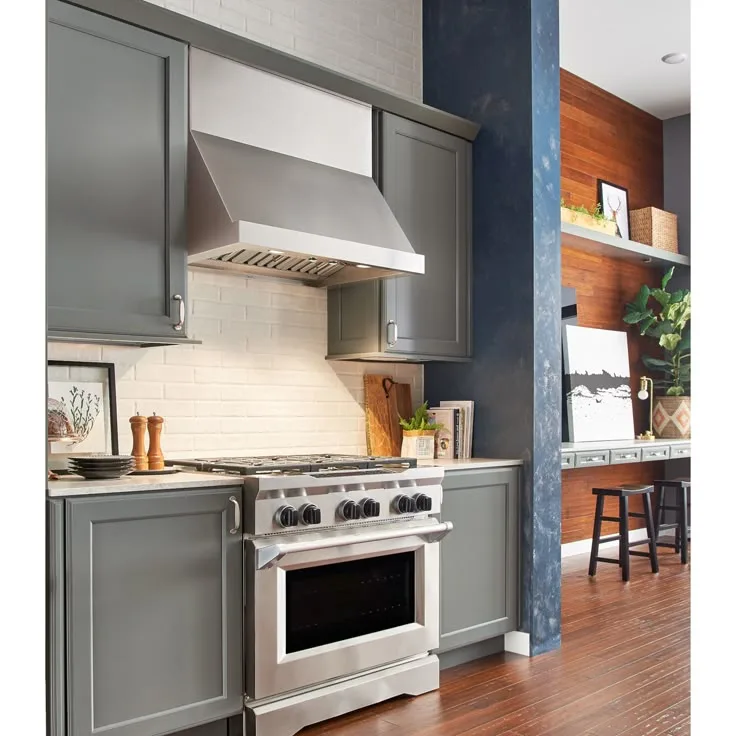
Image source: Web (Bing) / pinterest.com (Web image (fair-use with source credit))
Your Decision Variables: Cooktop, Kitchen, Duct, and Code
Every variable branches the workflow. Start with cooktop type and total BTU. Gas combustion produces nitrogen dioxide, carbon monoxide, and fine particulates that electric and induction do not.
That means gas demands higher capture velocity and mandates ducted exhaust, recirculating hoods cannot remove combustion byproducts.
Electric and induction cooktops generate heat and oil aerosols but no combustion gases. You can size closer to the minimum capture requirement. Induction's lower waste heat actually shrinks the thermal plume, which helps capture but reduces the natural buoyancy that drives the plume upward.
Kitchen volume sets the air-change baseline. IRC and ASHRAE 62.2 target 15 air changes per hour for kitchen local exhaust. Divide kitchen cubic feet by 4 to get the minimum cfm for 15 ACH.
That 1,728-cubic-foot kitchen needs 432 cfm just for volume.
Duct path determines delivered cfm. Straight rigid metal duct in the largest practical diameter preserves airflow. Each 90-degree elbow adds 15 to 30 equivalent feet.
A wall cap adds 30 equivalent feet. Flex duct doubles the friction loss per foot. Keep the run under 50 equivalent feet whenever possible.
Code adoption varies by jurisdiction. Check your local building department for the current IRC edition and amendments. Some require makeup air at 300 cfm.
Others mandate powered makeup air with interlock wiring. Permit and inspection requirements kick in at different thresholds. Know before you buy.
Branch 1: Sizing by Cooktop BTU (Gas, Electric, Induction, Pro-Style)
The BTU method is the most common starting point. For gas cooktops, divide total BTU by 100. A 48,000 BTU range yields 480 cfm minimum.
A 90,000 BTU pro range yields 900 cfm minimum. This method assumes standard residential burners and typical capture geometry.
Electric and induction cooktops don't use BTU ratings the same way. Use 100 cfm per 10,000 watts of total element power as a rough equivalent. A 30-inch electric range with four elements totaling 12,000 watts needs roughly 120 cfm by this metric.
But the volume and width methods usually override this low number.
Pro-style gas ranges change the math. Burners rated 18,000 to 25,000 BTU each create intense, concentrated plumes. Wok burners at 25,000 to 100,000 BTU demand capture velocities that standard hoods cannot provide.
You need a pro-depth canopy (24+ inches), baffle filters, and a blower curve that holds cfm at 0.4 to 0.6 inches static pressure.
Dual-fuel ranges with a grill or griddle add localized high-heat zones. The grill plume is wider and hotter than a burner plume. Size for the grill BTU plus the highest burner BTU running simultaneously.
That often pushes the total past 100,000 BTU and 1,000 cfm.
Table: BTU-to-CFM Quick Reference
| Cooktop Type | Typical Total BTU | Minimum CFM (BTU/100) | Recommended CFM Range |
|---|---|---|---|
| Standard 30" gas | 30,000–50,000 | 300–500 | 400–600 |
| 36" gas | 45,000–70,000 | 450–700 | 600–900 |
| 48" pro gas | 60,000–100,000 | 600–1,000 | 900–1,200 |
| 60" pro gas + grill | 90,000–150,000 | 900–1,500 | 1,200–1,500+ |
| Standard electric | 10,000–15,000 watts | 100–150 | 300–400 (volume/width) |
Use the higher of this result, the volume method, or the width method. Never pick the lowest number.
Branch 2: Sizing by Kitchen Volume (Air Changes Per Hour Method)
The volume method calculates cfm needed to exchange the kitchen air 15 times per hour. Take your kitchen cubic feet, multiply by 15, then divide by 60. That 1,728-cubic-foot kitchen needs 432 cfm.
If the kitchen opens to a dining area with no door, include that volume too.
A 200-square-foot kitchen with 8-foot ceilings holds 1,600 cubic feet. That yields 400 cfm minimum. A 300-square-foot great room with 10-foot ceilings holds 3,000 cubic feet.
That yields 750 cfm minimum. The volume method often exceeds the BTU method for electric cooktops in large spaces.
IRC M1503.4 references this 15 ACH target for domestic kitchen exhaust. ASHRAE 62.2 allows 100 cfm intermittent or 25 cfm continuous as an alternative, but the 15 ACH method remains the standard for capture verification. Use the higher of the two results.
High ceilings inflate the volume number fast. A 12-foot ceiling adds 50 percent more cubic feet over 8 feet. That extra air rarely needs full exchange because the plume rises and concentrates near the hood.
Some designers cap the volume calculation at 9-foot ceiling height for this reason. Check your local amendment.
Branch 3: Sizing by Hood Width (Linear Feet Rule)
The width method assigns 100 cfm per linear foot of hood canopy. A 36-inch hood (3 feet) needs 300 cfm. A 48-inch hood needs 480 cfm.
A 60-inch hood needs 600 cfm. This method ensures the capture velocity across the hood face stays sufficient to pull the plume inward.
HVI certification tests at 0.25 inches water column static pressure. The width method assumes that test condition. If your duct run adds more resistance, the face velocity drops and capture suffers.
That is why you must verify the blower curve at your design static pressure.
Pro-style hoods often exceed the 100 cfm per foot baseline. A 48-inch pro hood with 1,200 cfm delivers 250 cfm per foot. That extra velocity compensates for higher mounting heights and intense plumes.
Standard residential hoods rarely exceed the baseline because their blowers cannot overcome the static pressure.
Island hoods need 150 cfm per linear foot. The plume expands 360 degrees without a back wall to contain it. A 42-inch island hood needs 525 cfm minimum.
A 54-inch island hood needs 675 cfm. Mount island hoods lower, 30 to 34 inches above gas, to shrink the capture zone.
Table: Width-Based Minimums
| Hood Type | Width | Minimum CFM (100/ft) | Island Minimum (150/ft) |
|---|---|---|---|
| Wall mount | 30" | 250 | — |
| Wall mount | 36" | 300 | — |
| Wall mount | 42" | 350 | 525 |
| Wall mount | 48" | 400 | 600 |
| Wall mount | 54" | 450 | 675 |
| Wall mount | 60" | 500 | 750 |
Compare all three branches. Use the highest number as your design target.
The Ductwork Reality Check: Why Rated CFM ≠ Delivered CFM
A blower rated 900 cfm at free air delivers far less once connected to duct. Every fitting adds resistance measured in equivalent feet of straight duct. A 90-degree elbow equals 15 to 30 equivalent feet.
A 45-degree elbow equals 10 feet. A wall cap equals 30 feet. A reducer or transition equals 5 feet.
Rigid smooth-wall metal duct has the lowest friction loss. Semi-rigid aluminum flex adds roughly double the loss per foot. White vinyl or foil flex duct, still sold in big boxes, adds four to six times the loss and violates code for range hood exhaust.
Never use it.
Duct diameter dominates delivered cfm. Six-inch duct handles up to 400 cfm comfortably. Seven-inch handles 600 cfm.
Eight-inch handles 900 cfm. Ten-inch handles 1,200 cfm. Twelve-inch handles 2,000 cfm.
Undersizing the duct chokes the blower and spikes noise.
Calculate equivalent duct length. Add straight runs plus all fitting equivalents. A typical run: 10 feet straight, two 90-degree elbows (30 each), one wall cap (30), one transition (5).
Total 105 equivalent feet. At 105 equivalent feet, 8-inch duct at 900 cfm sees roughly 0.45 inches static pressure.
Check the blower curve chart in the spec sheet. Find your design static pressure on the vertical axis. Read across to the cfm curve.
That is your delivered airflow. If it falls below your design target, increase duct diameter, reduce fittings, or upgrade the blower.
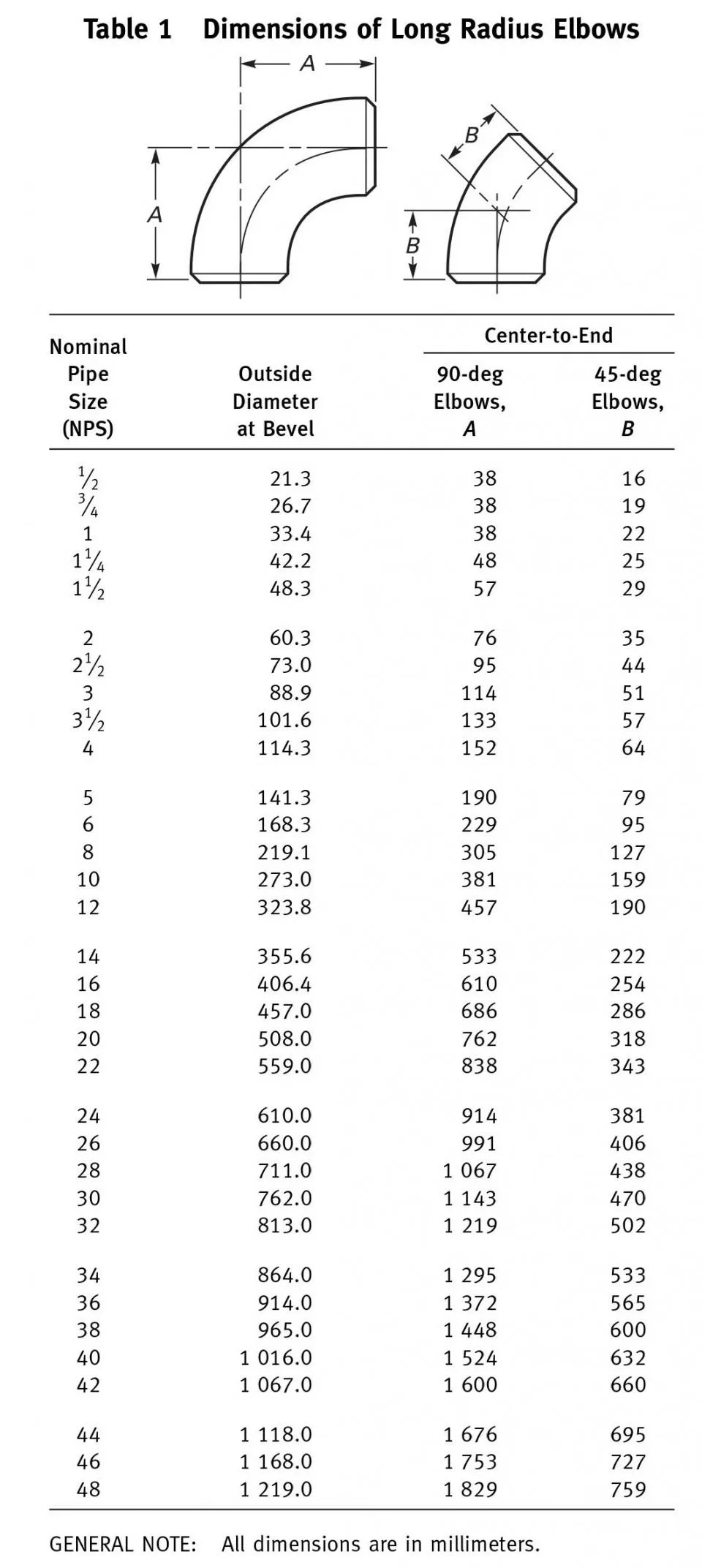
Image source: Web (Bing) / storage.googleapis.com (Web image (fair-use with source credit))
Makeup Air: The Hidden Branch That Changes Everything
IRC M1503.4 requires makeup air for exhaust systems exceeding 400 cfm. The makeup air must be supplied at a rate approximately equal to the exhaust. It must be interlocked so it operates whenever the hood runs.
Passive gravity dampers count only if they can pass the required airflow at the design pressure difference.
Tight homes need makeup air at any exhaust level. A home testing at 2 ACH50 cannot leak enough air to replace 300 cfm without significant negative pressure. That negative pressure backdrafts gas water heaters, furnaces, and fireplaces.
It also pulls radon, soil gases, and humid outdoor air through wall assemblies.
Passive makeup air uses a barometric damper in an exterior wall. The damper opens when indoor pressure drops below outdoor pressure. Size the duct for 1 square inch of net free area per 100 cfm.
A 600 cfm hood needs 6 square inches, roughly a 3-inch diameter duct. In practice, use 6-inch duct to reduce velocity and noise.
Powered makeup air uses a supply fan matched to the exhaust cfm. The fan interlocks with the hood switch or a pressure sensor. This works in tight homes and cold climates where passive dampers freeze shut or admit freezing air.
Tempered makeup air heaters preheat the supply air to 50 to 60 degrees Fahrenheit.
ERV or HRV integration provides balanced ventilation with heat recovery. The ERV must have a dedicated makeup air port and a controls interlock. Not all residential ERVs support this.
Check manufacturer specs. This is the gold standard for Passive House and high-performance builds.
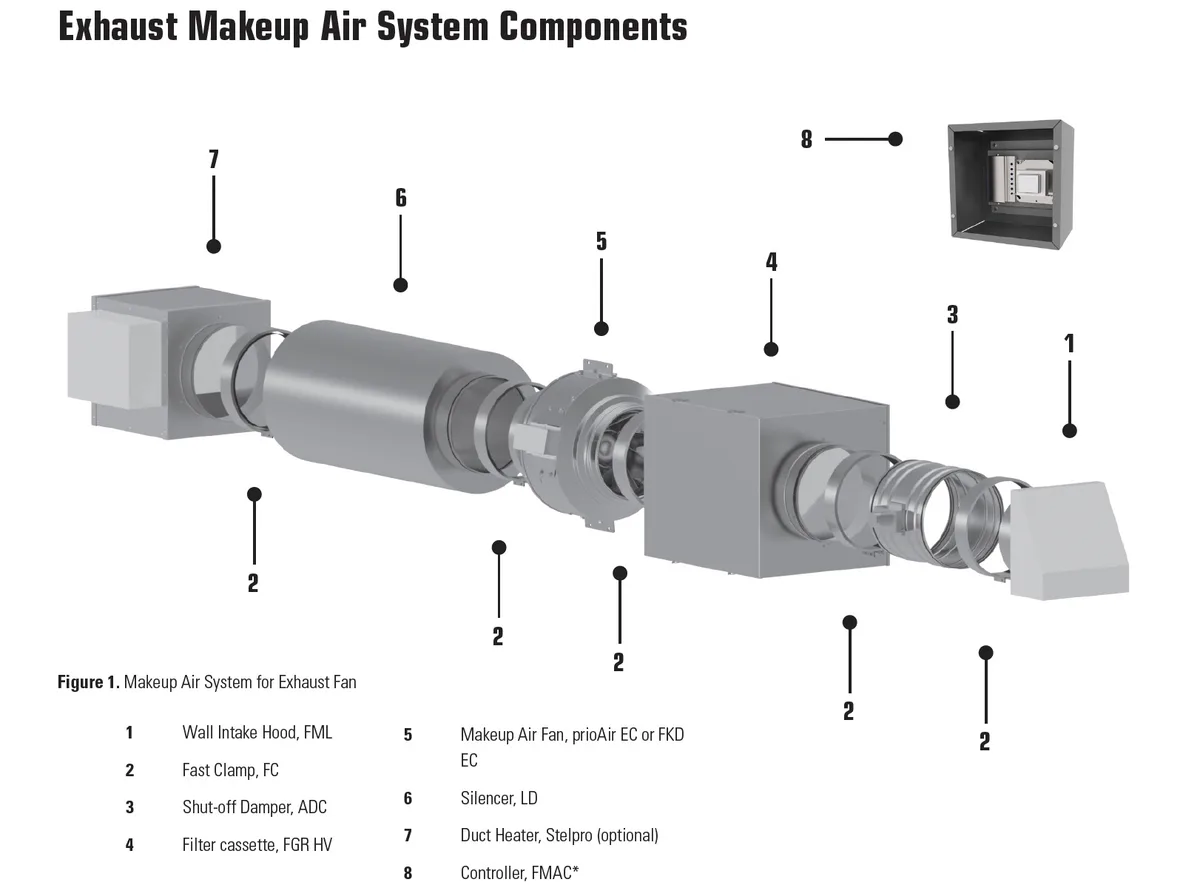
Image source: Web (Bing) / greenbuildingadvisor.com (Web image (fair-use with source credit))
Hood Type & Geometry: Matching Canopy Depth and Mounting Height to Your Cooktop
Wall-mount canopy hoods are the most common. Standard depth 18 to 20 inches. Pro depth 24 to 27 inches.
Mount 30 to 36 inches above gas. Mount 24 to 30 inches above electric. The deeper canopy lets you mount higher without losing capture.
That extra height saves your forehead and reduces heat exposure to the hood liner.
Island hoods need more depth and more cfm. No back wall means the plume expands freely. Minimum 24-inch depth.
Preferred 27 to 30 inches. Mount 30 to 34 inches above gas. The lower mount compensates for the missing wall containment.
Island hoods also need 150 cfm per linear foot per the width method.
Under-cabinet hoods sit inside a cabinet bottom. Depth limited to 18 to 20 inches. Capture suffers because the canopy sits flush with the cabinet face.
The plume must turn a sharp corner to enter. These work for low-BTU electric but struggle with high-output gas. Avoid for pro-style ranges.
Downdraft systems pull air down and back. They fight buoyancy. The plume wants to rise.
Downdraft needs 600 cfm minimum for a 30-inch cooktop and 1,000 cfm for 36 inches. Capture efficiency drops sharply above the front burners. Only choose downdraft when overhead ducting is impossible.
Custom inserts fit into a decorative canopy. The insert determines performance. Choose an insert with the blower curve, filter type, and lighting you need.
The decorative shell is cosmetic. Ensure the shell opening matches the insert capture area. A pretty shell that blocks the plume defeats the insert.

Image source: Web (Bing) / mardeys.com (Web image (fair-use with source credit))
Blower Location: Internal, In-Line, or Remote — What Fits Your Duct Path
Internal blowers mount inside the hood canopy. They are easiest to install but put motor noise in the kitchen. Typical max 600 to 900 cfm.
Best for short, straight duct runs under 30 equivalent feet.
In-line blowers sit inside the duct run, often in the attic or soffit. They move noise away from the kitchen. Available up to 1,500 cfm.
Require access for maintenance. Ideal for long runs or when the hood canopy lacks depth for a large motor.
Remote blowers mount on the roof or exterior wall. They remove all motor noise from the living space. Highest capacity, 1,200 to 2,000+ cfm.
Need weatherproof housing and roof penetration. Best for pro-style ranges, long complex runs, and noise-sensitive open plans.
Match blower curve to your design static pressure. Internal blowers lose cfm faster as pressure rises. Remote blowers hold curve better.
Check manufacturer performance charts at 0.25, 0.5, and 0.75 inches w.c.
Common Mistakes That Undermine Even the Right CFM
Undersizing duct diameter is the top error. Six-inch duct on a 900 cfm hood chokes flow to 500 cfm. Always size duct for the target cfm, not the hood collar.
Use a reducer at the hood if needed.
Too many elbows kill airflow. Each 90-degree turn adds 15 to 30 equivalent feet. Two elbows plus a wall cap can equal 90 feet before you run a straight foot.
Reroute to minimize turns. Use 45-degree elbows where turns are unavoidable.
Mounting the hood too high expands the plume past the canopy. Every 3 inches above the manufacturer's max height costs roughly 100 cfm of effective capture. Follow the spec.
Lower is better for capture.
Recirculating hoods on high-BTU gas cooktops fail to remove combustion byproducts. They filter grease and odor only. Nitrogen dioxide, carbon monoxide, and PM2.5 stay in the room.
Ducted exhaust is non-negotiable for gas.
Forgetting makeup air triggers backdrafting. A 600 cfm hood in a tight home pulls flue gases down the water heater vent. Install makeup air per code.
Test with a smoke pencil at the draft hood.
Code Compliance Checkpoint: What Inspectors Actually Verify
Inspectors check for ducted exhaust to the exterior. Recirculating hoods are not permitted for gas cooktops in most jurisdictions. The duct must terminate outside, not in the attic or crawl space.
Duct material must be rigid metal or listed semi-rigid. Vinyl or foil flex fails. Duct joints must be sealed with foil tape or mastic.
Screws must not protrude into the airstream.
Makeup air interlock is verified at final. The supply damper or fan must activate with the hood. Passive dampers must be accessible and sized per the cfm calculation.
Powered systems need a wiring diagram on site.
Hood mounting height must match the manufacturer's listed range. The label on the hood lists min and max. The inspector measures from cooktop surface to hood bottom.
Electrical requires a dedicated circuit for hoods over 300 watts or per local amendment. GFCI protection where required. The disconnect must be accessible.
Hardwired units need a junction box in the cabinet above.
Step-by-Step Workflow: From Cooktop Specs to Final Hood Spec
- Record cooktop type, total BTU, width, and depth.
- Measure kitchen volume including open adjacent areas.
- Choose hood width: cooktop width plus 6 inches minimum.
- Select mounting height per manufacturer for your cooktop type.
- Calculate Branch 1: gas BTU divided by 100. Electric: watts divided by 100.
- Calculate Branch 2: kitchen cubic feet times 15 divided by 60.
- Calculate Branch 3: hood width in feet times 100 (150 for island).
- Set design cfm target as the highest of the three branches.
- Design duct run: shortest path, largest practical diameter, rigid metal.
- Compute equivalent duct length and design static pressure.
- Select blower that delivers design cfm at design static pressure.
- Determine makeup air requirement: 400 cfm trigger or lower per local code.
- Size makeup air path and select passive or powered system.
- Verify HVI rating at 0.25 inches w.c. matches your needed cfm.
- Pull permit, schedule rough-in and final inspections.
FAQs: Edge Cases, Odd Duct Runs, and Recirculating Limits
Can I use a 600 cfm hood on a 48-inch pro range?
Only if the total BTU is under 60,000 and the duct run is very short. Most 48-inch pro ranges exceed 80,000 BTU. You need 800 cfm minimum.
Check the BTU method first.
What if my duct run exceeds 100 equivalent feet?
Increase duct diameter by one size. Switch to an in-line or remote blower with a steeper curve. Reduce elbows.
Every 10 equivalent feet costs roughly 25 cfm on 8-inch duct.
Is a recirculating hood ever okay for gas?
No. Recirculating filters cannot remove nitrogen dioxide, carbon monoxide, or combustion particulates. Code prohibits them for gas in most areas.
Use ducted exhaust only.
Do I need makeup air at 350 cfm?
If your local amendment sets the trigger at 300 cfm, yes. If your home tests below 3 ACH50, yes regardless of code. Tight homes need makeup air at any exhaust level.
Can I vent through the roof instead of the wall?
Yes. Roof terminations need a listed roof cap with backdraft damper. The vertical run adds stack effect assist.
Ensure the cap height meets code above the roof line.
Final Decision Guide: How to Choose With Confidence
Start with your cooktop. Gas demands ducted exhaust and higher cfm. Electric and induction allow lower cfm but still need capture geometry.
Pro-style ranges require pro-depth hoods and remote or in-line blowers.
Match the hood width to the cooktop plus 6 inches. Deeper canopy beats higher cfm. A 24-inch deep hood at 800 cfm captures better than an 18-inch hood at 1,000 cfm.
Design the duct first. Short, straight, large diameter. If the run is long or complex, budget for an in-line or remote blower.
Never compromise duct size to fit a cabinet.
Calculate all three sizing branches. Use the highest number. Add 10 to 15 percent margin for filter loading and real-world variance.
That is your design cfm.
Verify makeup air. If design cfm exceeds 400, plan the supply path now. Passive for moderate cfm in leaky homes.
Powered for tight homes or cold climates. ERV integration for high-performance builds.
Buy HVI-certified. The label guarantees the cfm at 0.25 inches w.c. Non-certified hoods often deliver 30 to 50 percent less than advertised.
That certification is your insurance.